Yukon days
October 2016, nine years ago

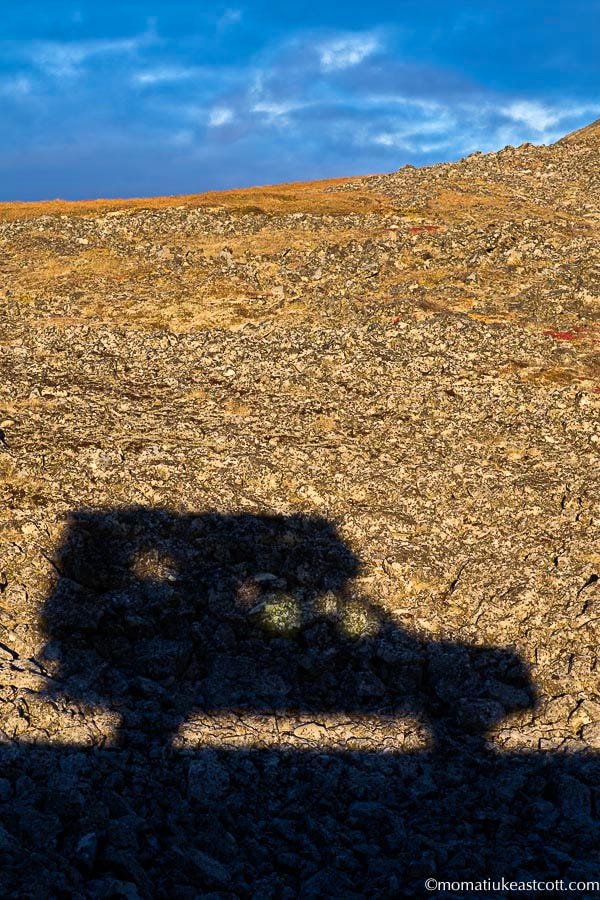
We are rolling on the Dempster Highway in the Yukon; the idea is to slow down and not hurry it.
The road -- 460 miles of packed gravel - dips into long valleys and weaves between tall ridges with smudges of wind-blown snow outlining their bulk. And our old truck? With a turning radius so tight it would make smaller vehicles blush, and its less than 20 foot length from nose to tail, it contains all we need, goes where we want to go thanks to its great clearance and low 4WD range, and has been carrying us all over North America and -- recently -- Iceland. It is our home, too, because gradually it absorbed multiple modifications John instituted in his outbursts of ingenuity. One year, he may strip its aluminum siding and insulate the rig. Another year he may move the camper's center of gravity four inches forward, or install better reading lights. Add storage space where there was none before. Affix a solar panel to our roof. Put in an extra step to make our climbing in and out easier. And so on.
In our 7"x10" living space we cram our water tank, cooking stove and small fridge. Also: our library, wardrobe, shoes, tools, photographic equipment, medicines, bedding, food and cooking stuff. We carry hitchhikers we pick up when bad weather slams the road and there is no shelter for miles and the skin starts to crawl in freezing cold. We also carry us: two bloody-minded people who can be as unyielding as a rock but will also look at the other recalcitrant being who can be as soft as butter, too, and think: oh, I love you so....
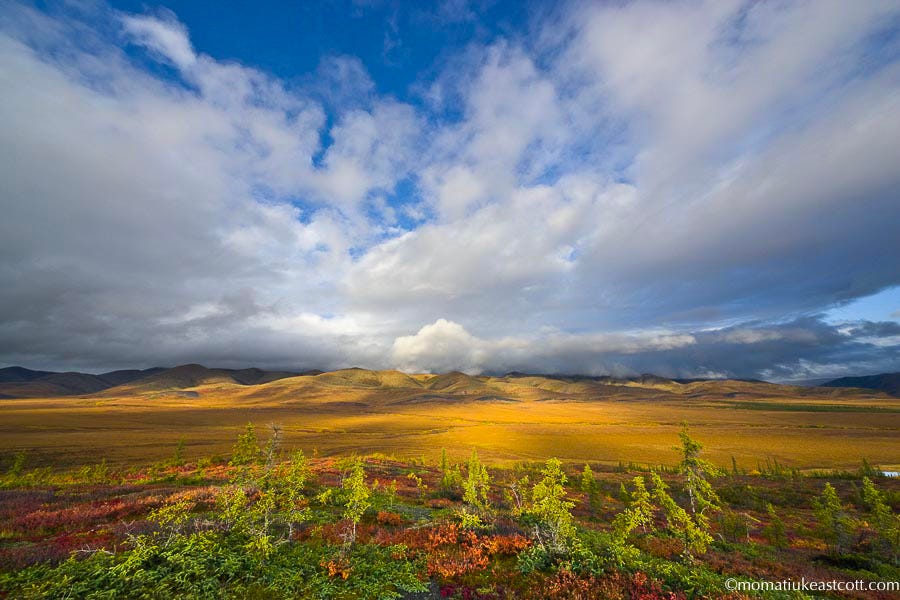
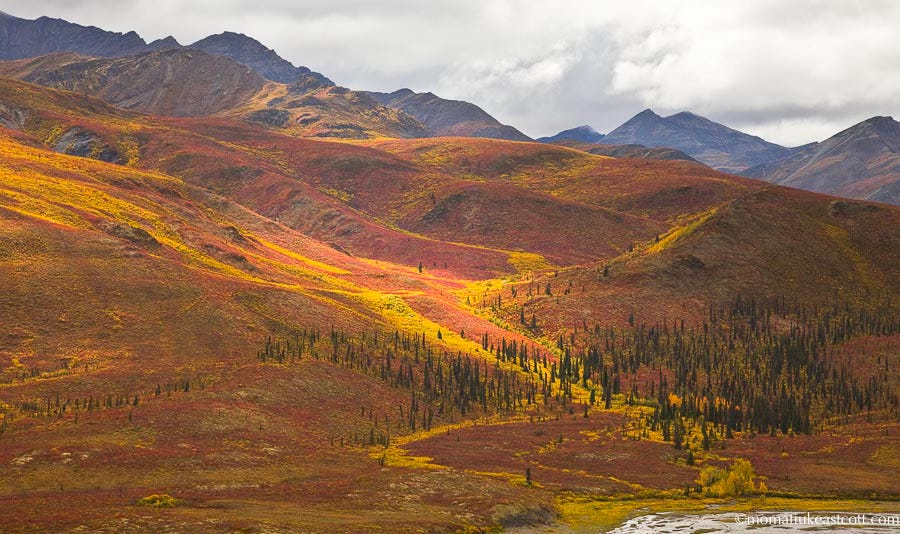
This is where taiga, the spiky northern forest of mostly black spruce we call pipe cleaners, as well as fir and larch, slowly recedes and is about to slide into tundra.
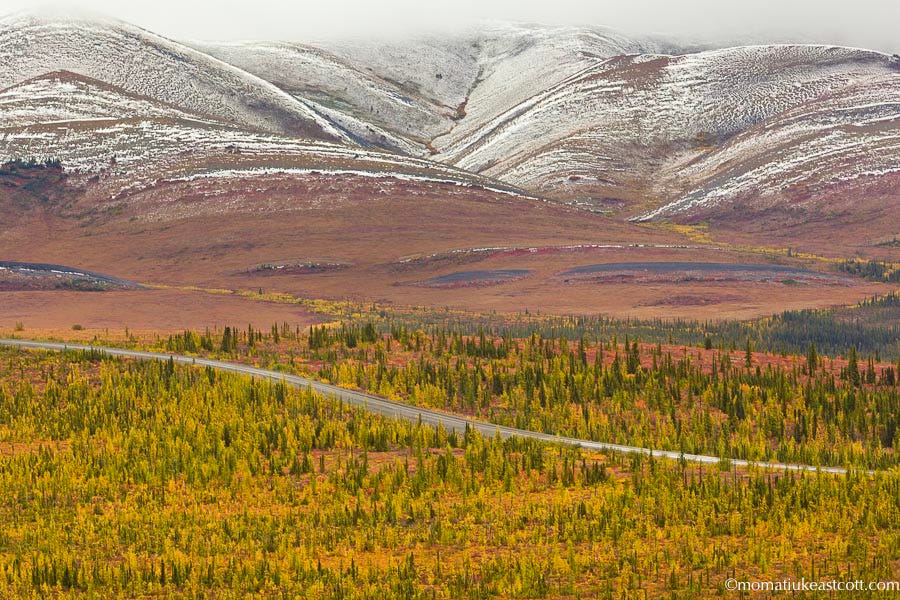
In a few weeks the colors here will dim, so we often park and enter the woods soundlessly, with our boots stepping on spongy-soft caribou lichens.
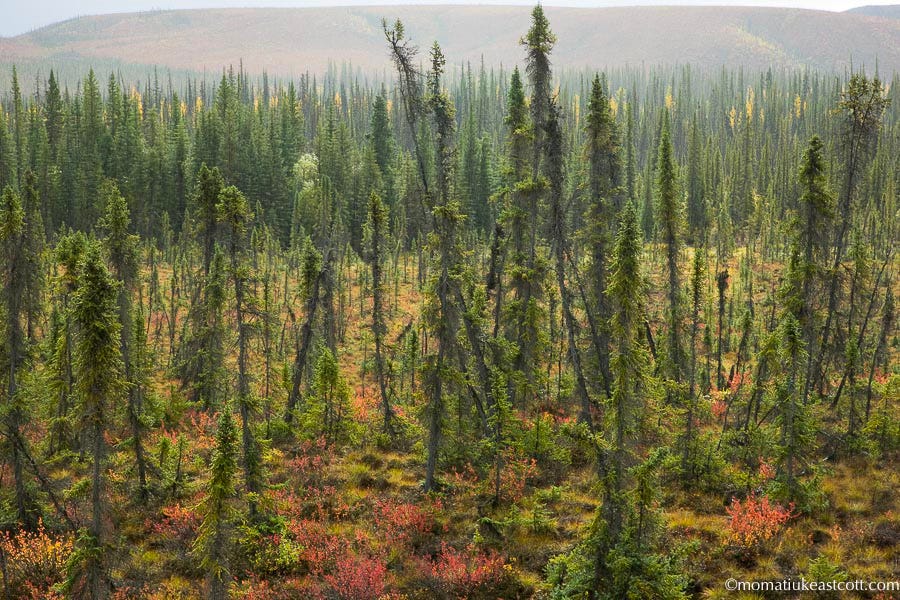
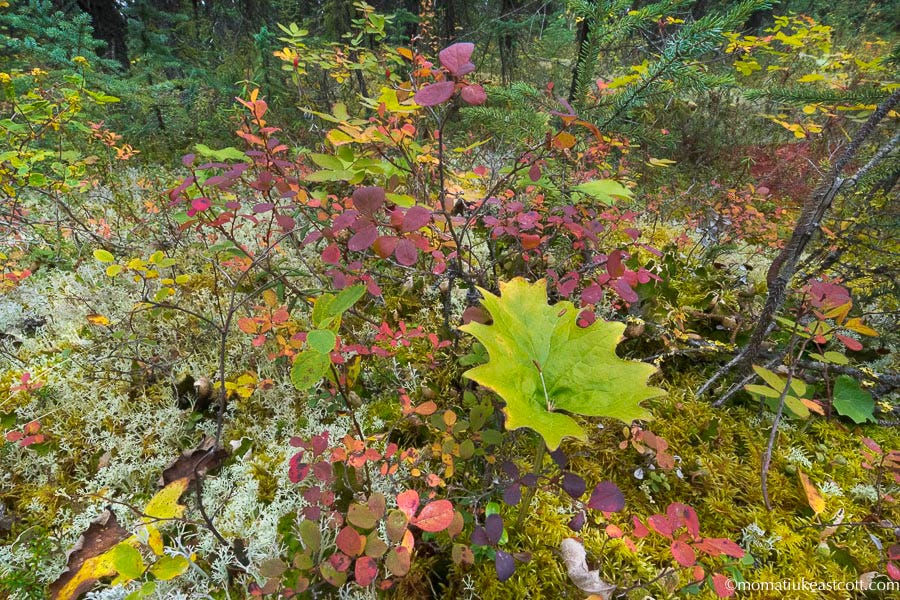
We seldom go far. The forest floor is crammed with a multitude of color-shifting plants which take our breath away, and we crawl around with our mouse-level view of giant everything.
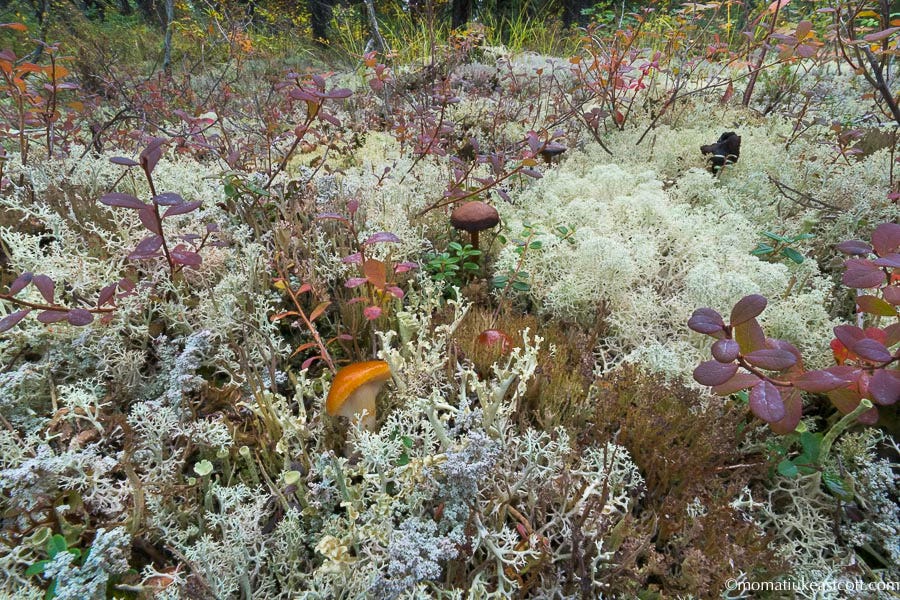
Another mouse garden, brimming with rich hues.
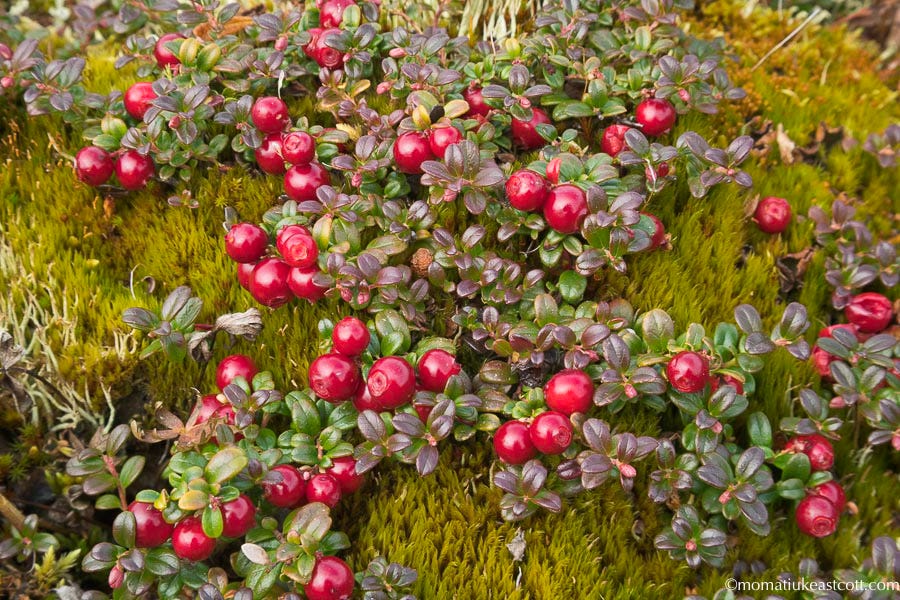
There is some valuable wild food, too: vitamin C-laden partridgeberries.
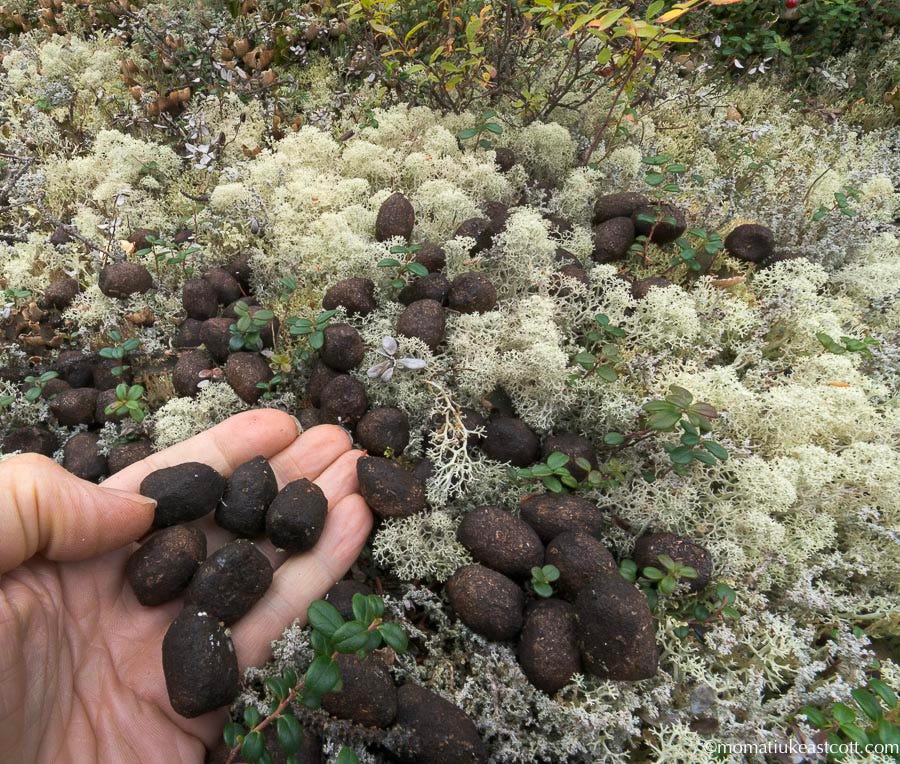
We both collect spider webs on our foreheads and blueberry elbows. There are many animal droppings: this bunch of pellets signals caribou presence.
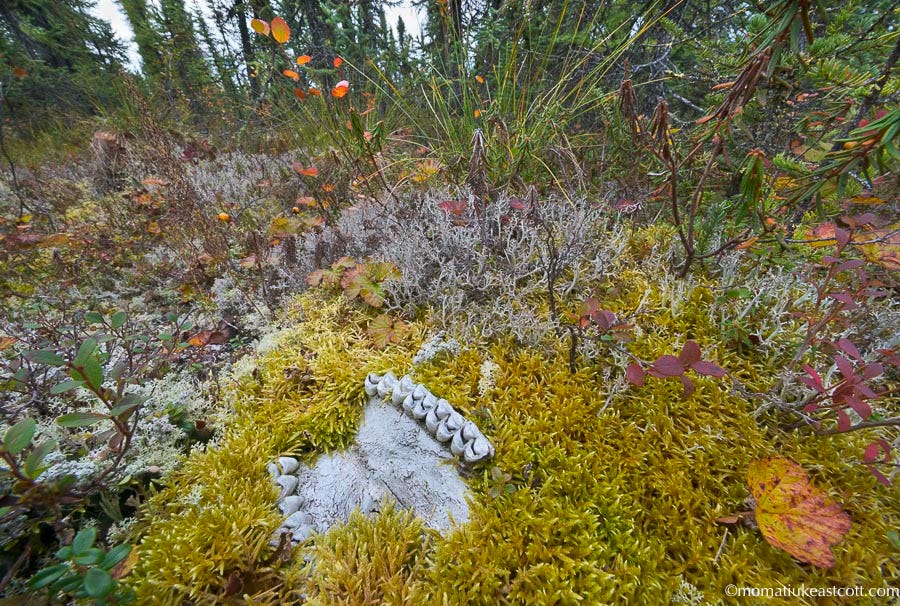
And a well preserved caribou's lower jaw, with its set of powerful molars and ridge surfaces designed to crush and grind tough vegetation of the Arctic.
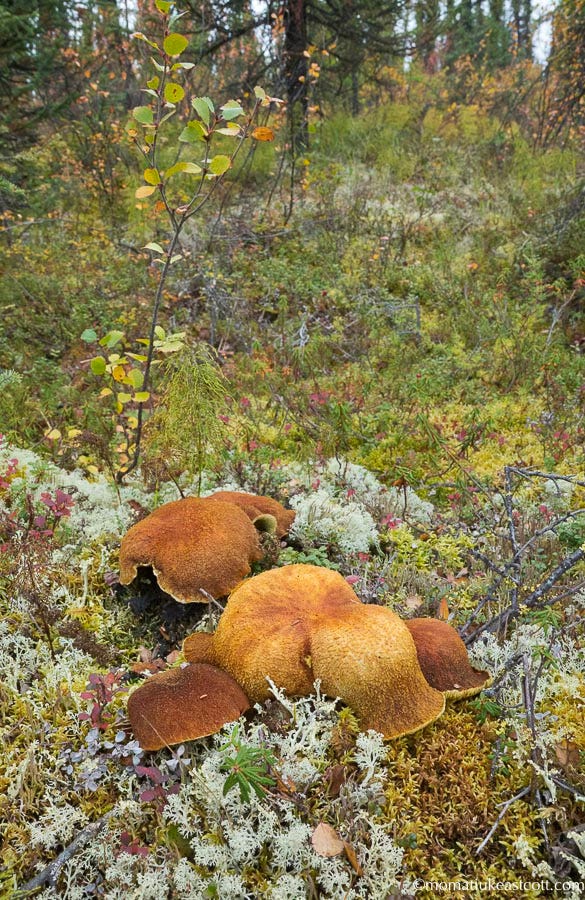
And: shrooms! My old mushroom hand's caution kicks in: you do not know this lot, so do not even think about it! And I do not.
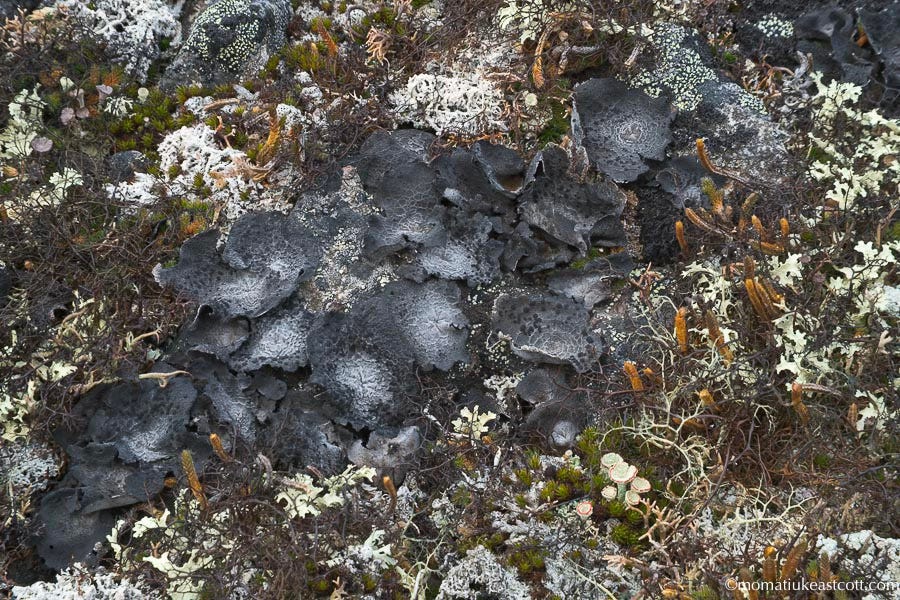
Here are elegant lichens in their formal dinner attire.
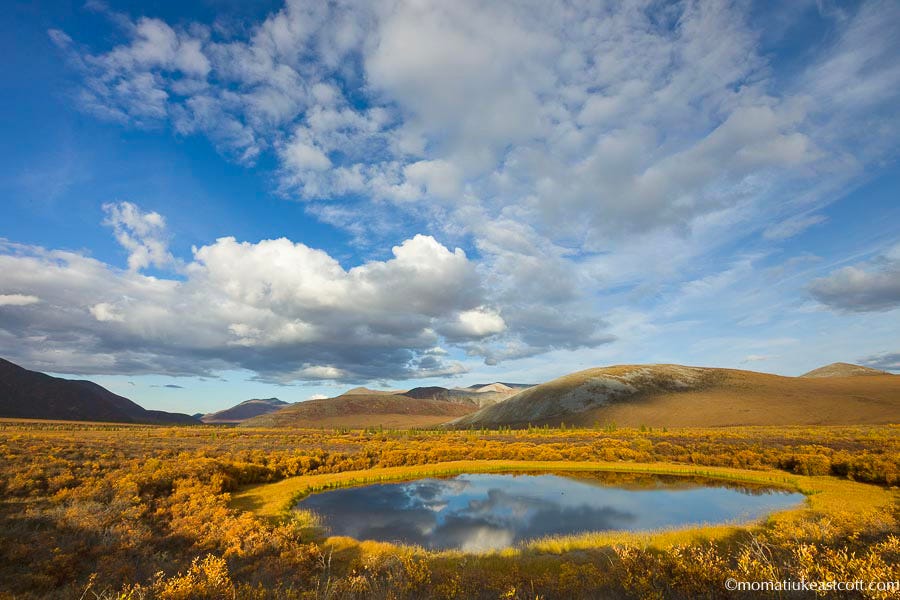
Further up the valley the spiky trees step back and there is a kettle pond, an indentation punched into layers of sand and gravel during the last ice age by a massive block of ice. The block later melted, and the dip filled with water, now framed with water-loving plants. Who lives there, in this clean pond? And over that rocky hill, further north? We know there is plenty of life there, just not easily seen. And we will not even try to find it tonight.
Soon the tundra starts to roll and buckle, with crimson patches of blueberry bushes riding its rocky waves.
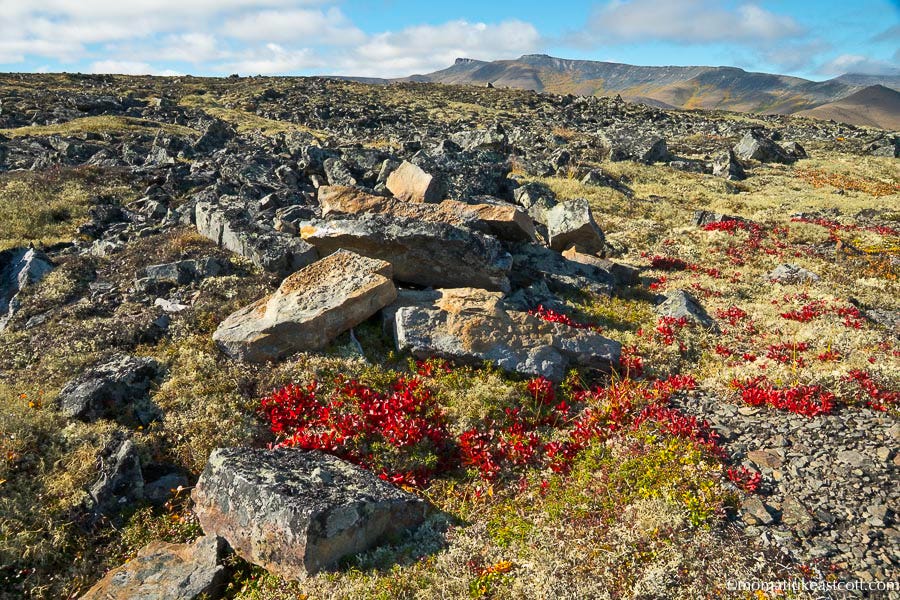
Night comes, fast and dark. We park by a steep esker trimmed with dwarf willows and birches just north of the Arctic Circle. Walk around a bit to gentle the place and make it more hospitable. I cook our standard one-pot staple: some rice, a can of red salmon and a package of Tasty Bites sauce from India. We discovered it years ago in Anchorage, Alaska, and have never traveled without these packages since. Eat. Wash, rinse. Scrub our teeth. Climb up to our bed suspended above the cab of our Tundra truck. John reads aloud for a while and then turns the light off. Quiet. Drifting.
What?!
The camper is moving. Did we forget the hand brake? It never happened before but there is always the first time. So, how is our parking spot? is it level, or sloping toward a ravine nearby? and which way did we park: with the hood facing the ravine -- or the wall of the esker?
The gliding movement stops -- the hand break finally gripped? -- but the camper is now rocking. Back and forth, and sideways. Not a sound, just this rocking motion. And suddenly I know: it is a bear rubbing against our home on wheels, most likely near our propane tank which sits in its outside compartment next to the outdoor shower.
So I do what I do at night when we are bothered by a state police or a sheriff's department big hat guys: go into action. Such disturbances do not happen often but they do occur because we avoid organized campgrounds at all cost. Why? Campgrounds often charge real money, and we travel spending as little as we can because we have no idea if what we photograph or write about will bring us any income a year or two down the line. And because such places are well organized the way they must be but often distant from our potential subjects. Also, we do not want any well organized stuff in our lives if we can help it.
I slide off our bed to confront the rocker. The bear is probably rubbing his itchy back against our abode. He has mites or lice, or just some nasty itchy spot he cannot reach. If we were in a taiga full of itch-friendly trees with really coarse bark everywhere, he would stick his sore bum against one of them and seek relief. Or, if the itch was somewhere in his massive shoulders, he would stand on his hind legs and scratch that very spot -- and possibly the whole damn back as well, from the neck to his puny tail.
He is somewhere by our back door but no way I am going to open it; a silly precaution, because he can rip it open with one clean swipe of the front paw armed with his sharp boxcutter claws. So I slide the glass in the window between the cab and camper, and -- making my voice low and convincing, the way a bear would surely sound if he wanted to warn his adversary -- I tell him to STOP! and GO AWAY! Then I close the window, climb up to John warm and snug in our bed, and consider the matter closed. And it is.
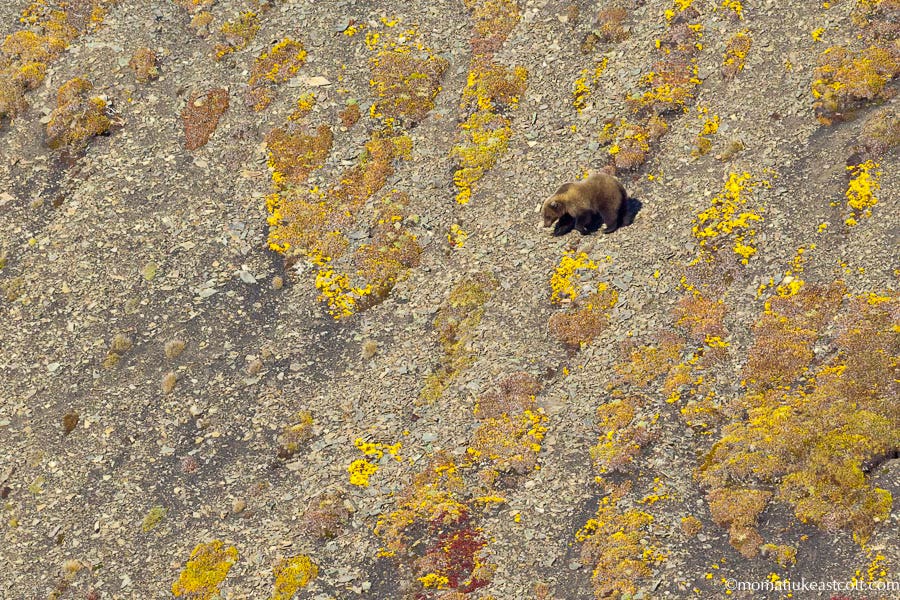
In the morning we look around and, sure enough, there is our house rocker crossing a steep slope on a diagonal line which may, or may not be, his trail. In the next few weeks he has to pack on far more weight to survive winter hibernation which may last seven months. Here in the Arctic all nature's rules are spelled all too clearly, and to lose quarter of your body fat -- but still survive the winter -- you need to fatten up. Females' gain and loss of weight is even more extreme. So our house rocker, driven by hyperphagia -- extreme appetite -- has to hunt large game, devour carrion, pursue Arctic ground squirrels, chew supple roots of alpine hedysarum and vacuum ripe blueberries all day. He has no interest in us.
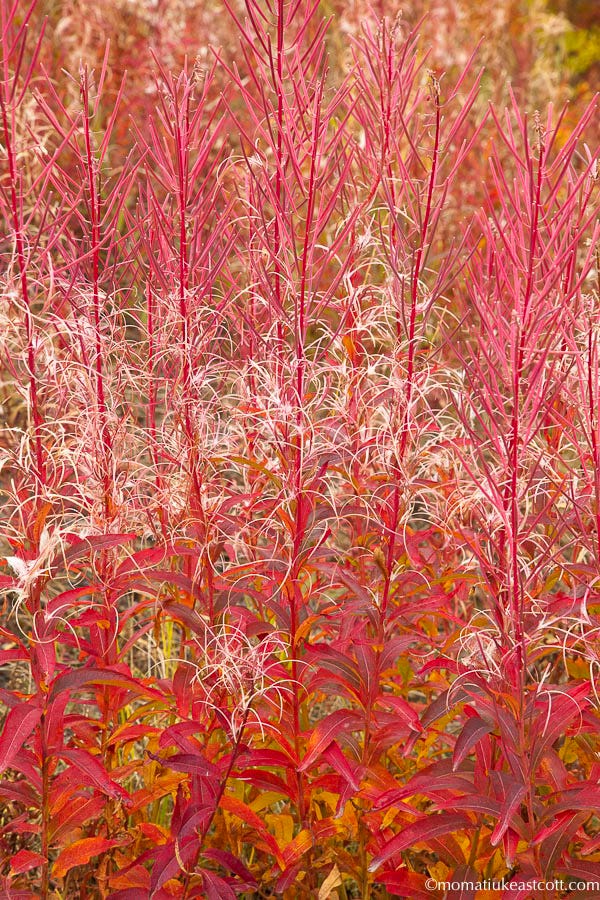
Hey, there is fireweed in the ravine, just past bloom!
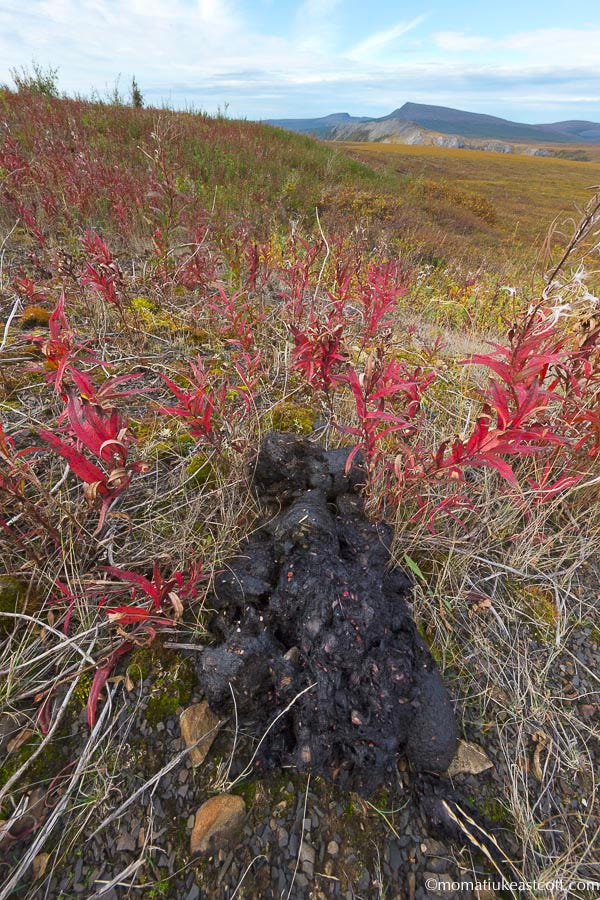
And bear scat, fresh and moist, nearby. A vegeterian's delight, with lots of berries.
We drive along a valley, then suddenly dip toward a small wetland and see quickly shifting sunlight piercing the clouds.
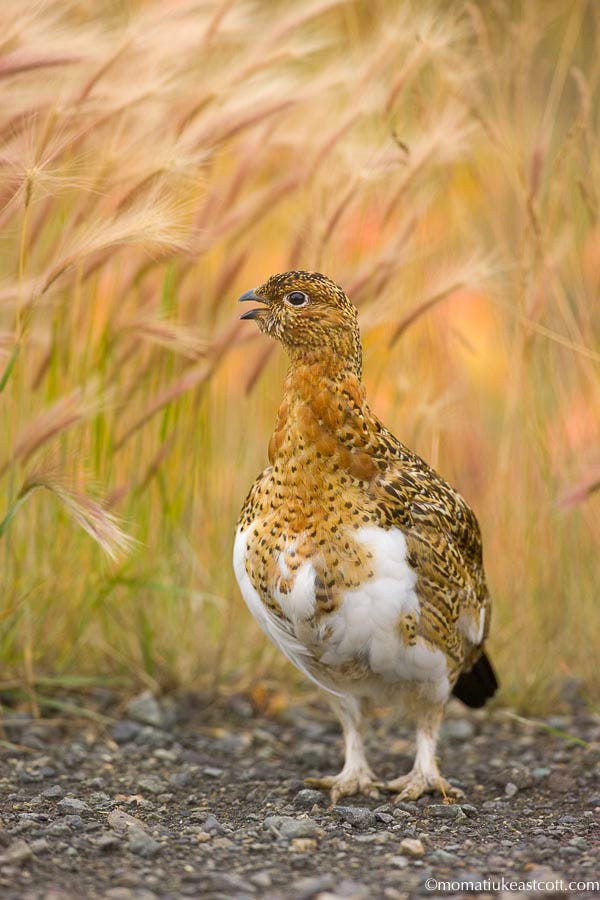
Aha! a ptarmigan, alarmed but not enough to flee.
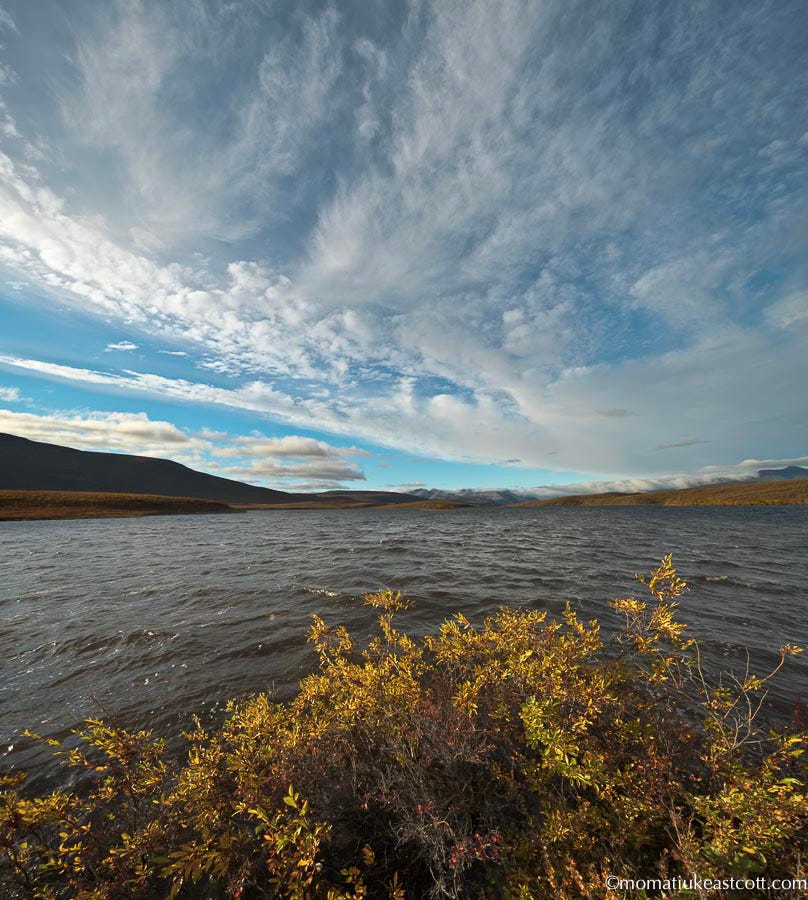
The wind returns and rips the surface of a large lake nearby. It is almost late fall, and it feels as if the year, like a tundra bear, is about to fall into some pre-ordained abyss of repose. Not yet -- but soon.
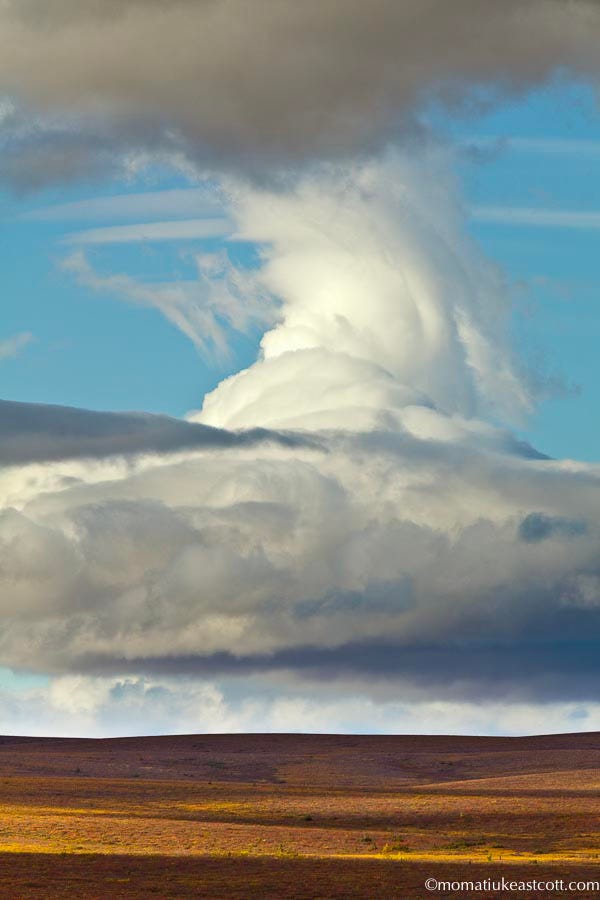
After the next few sun-suffused cold days we emerge from the Richardson Mountains and the land flattens. The clouds are here, too. Towering.
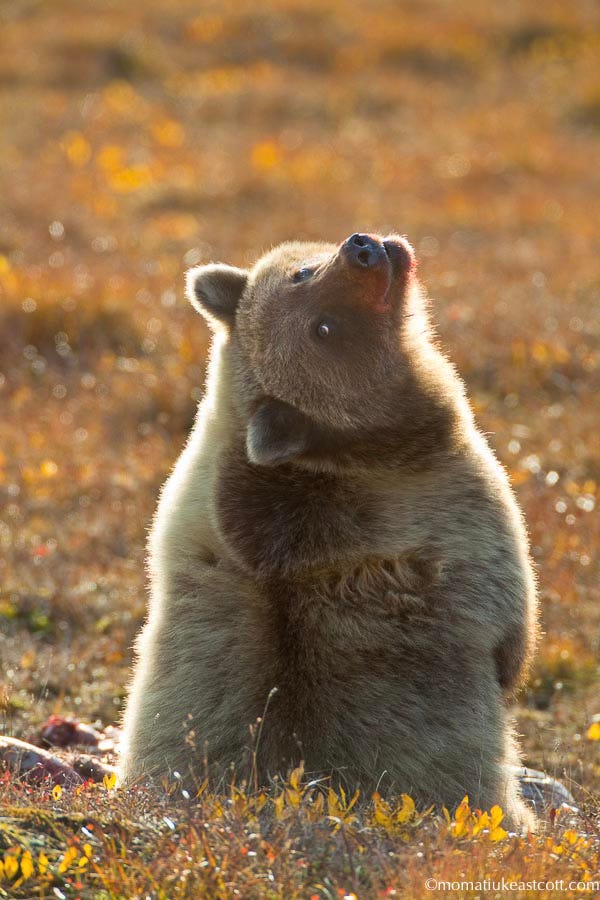
And yes, the caribou hunting season has been here full tilt. The bears learn about it faster than we do, and now they do not even interrupt their offal slurping and bone crushing labors. One boar faces us with the message written all over his wide face: what the hell are you doing here? This is not your kill!
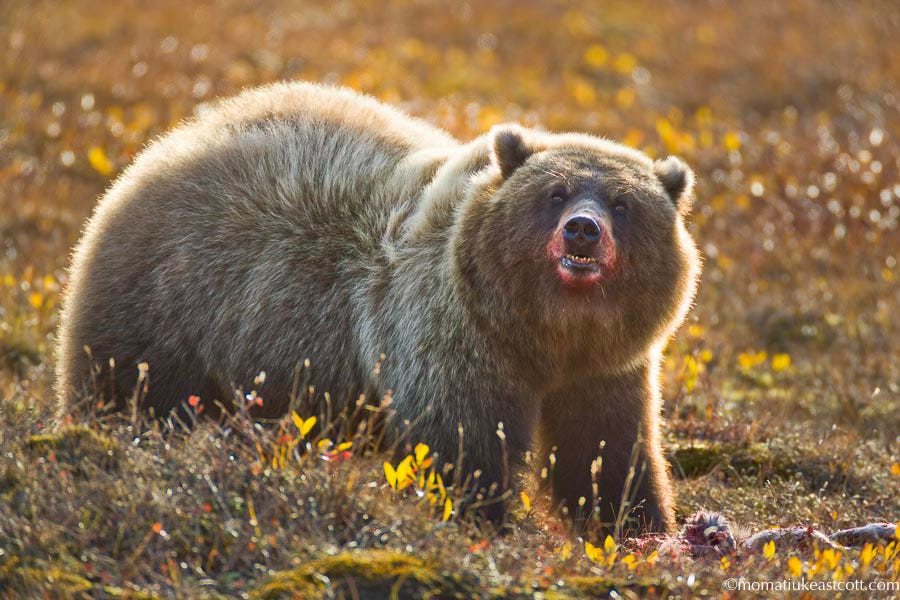
We move on but he does not let us out of his sight until we leave. He is already fat and warmly furred. Good.
And then, on a small rise, there is a human-made object: an instrument with four sturdy legs stuck into the hard ground. John, in a bout of his "bad boy" persona, wants to give it a mighty shake and create some consternation among scientists intercepting the instrument's readings. But we are no longer alone: a battered truck pulls up next to our Tundra. The emerging man looks the part: lean, with harsh weather drawing fine furrows all over his tanned face. And, as it often happens during such chance encounters in remote back country, we soon fall into an easy back-and-forth, with names and memories of remote places he and us know, and people we traveled with. Mostly here, in the Canadian Arctic. All these places and people stayed in our memory like great open books, partly read but never finished.
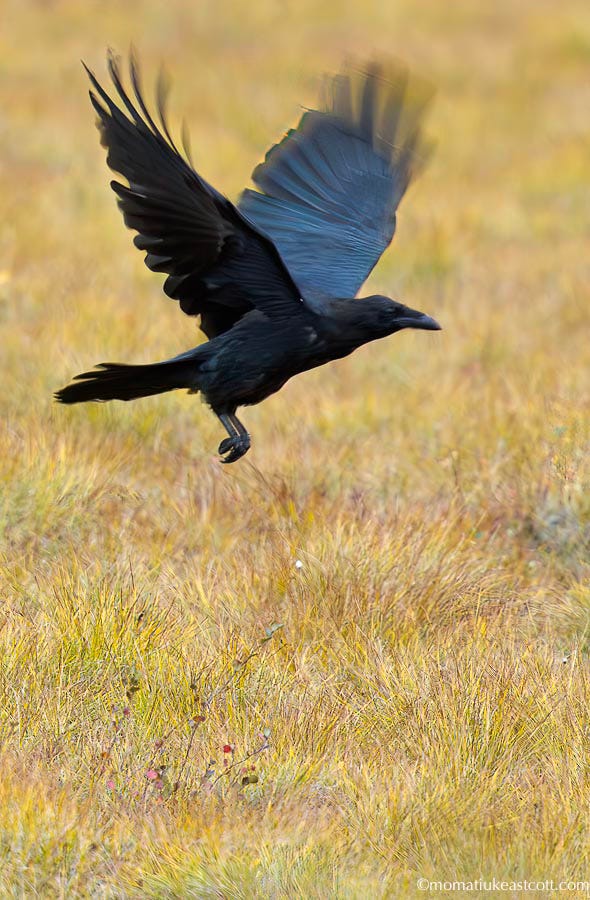
We want to know what he is measuring here, and he tells us it is the tide of the Earth's crust. So, the moon and the sun work on these rocks and plants as surely as they work on water during oceans' twice-daily surges? Yep. But what he wants to know is if we met Hello Raven: this smart corvid must have learned the word from scientists who drop by, and he greets them often. Good enough, we say, we will have our ears peeled.
That very night, it happens. Hello, hello....
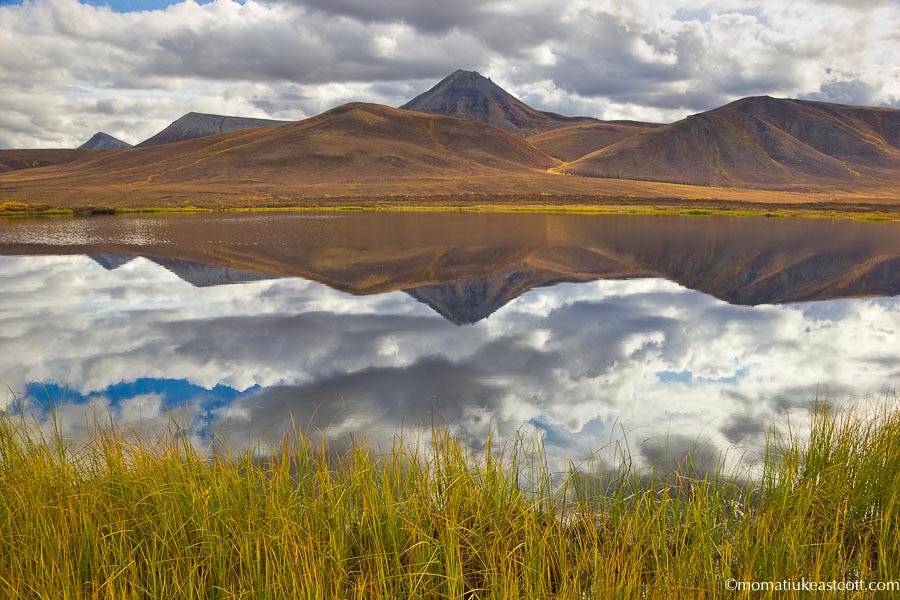
We pass more peaks and bodies of water
and then cross big Mackenzie River on a car ferry.
And -- already in the Northwest Territories -- we suddenly want a shower, our first in two weeks. We drive to the hamlet of Inuvik, pop. 3,243, find women who know everything, and head for the local school's swimming pool. The blue pool, clean and deep, is surrounded by bright murals showing broad sandy beaches. There are also tall plastic palm trees perched on rock pedestals.
Fish? Yes! we shower and go to find smoked Arctic char, the native food known to the Inuit of the far North, something we shared with them years ago. But do the Inuvialuit, Gwich'in, and Metis people who live here, fish for char -- and smoke it? Yes, they do: we depart with our wind-dried slab of raw fish to be admired and tasted on the river bank.
John pretends to take the first bite.
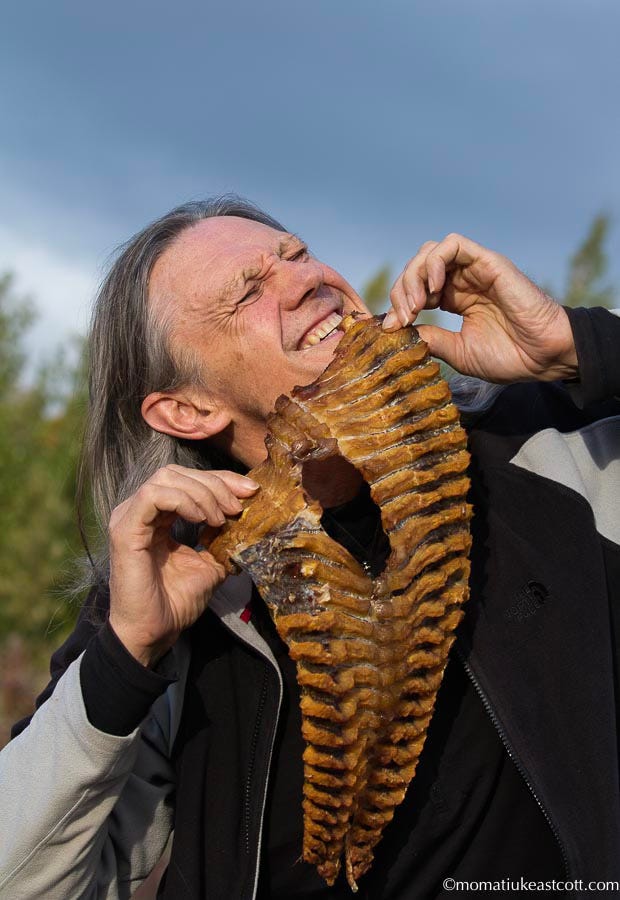
I try to put the fish on as a face mask just to smell its fragrance, and then we methodically scoff much of the slab. No knife and fork, no table and plates. No salt, either: this is how we used to eat dry char in Umingmaktok in 1976, out first year in the Arctic. And if I close my eyes right now and try to remember, the taste, delicate yet rich, still fills my greedy mouth.
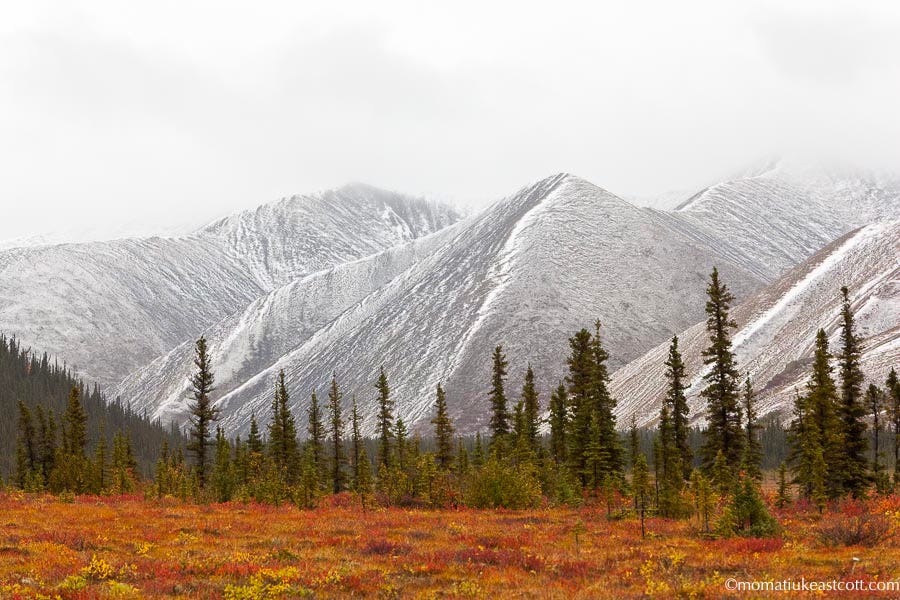
The next day the snow comes.
©Yva Momatiuk 2026
Magnificent photos. Savoring them is a nourishing ending to a numbing day. Sir bear looks mildly approachable. Thank you, John and Yva.