Processionary Life
I just returned from N.Z. where I hit my head hard enough to earn a concussion. So to speed up my recovery I am posting my 2011 story from outback Australia, where survival of all living things rules.

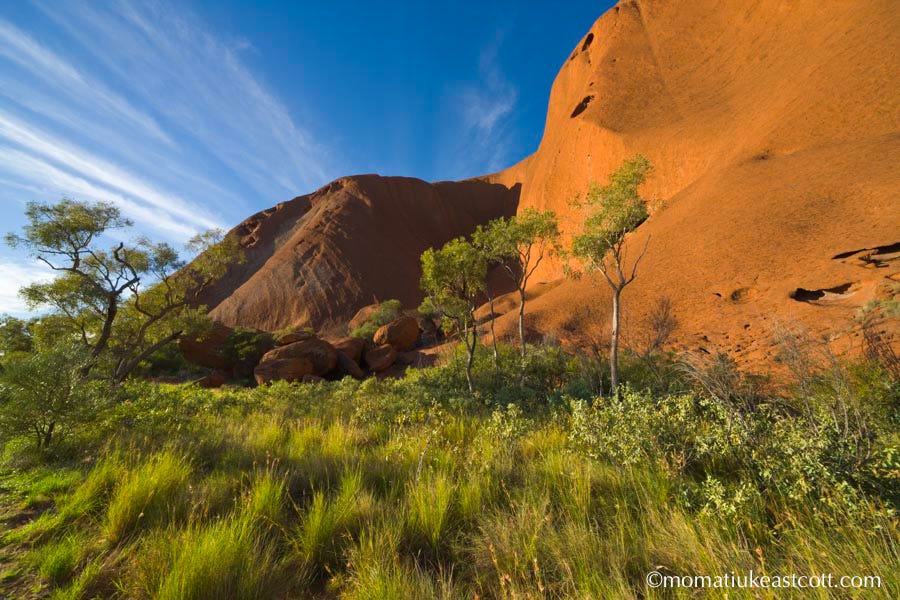
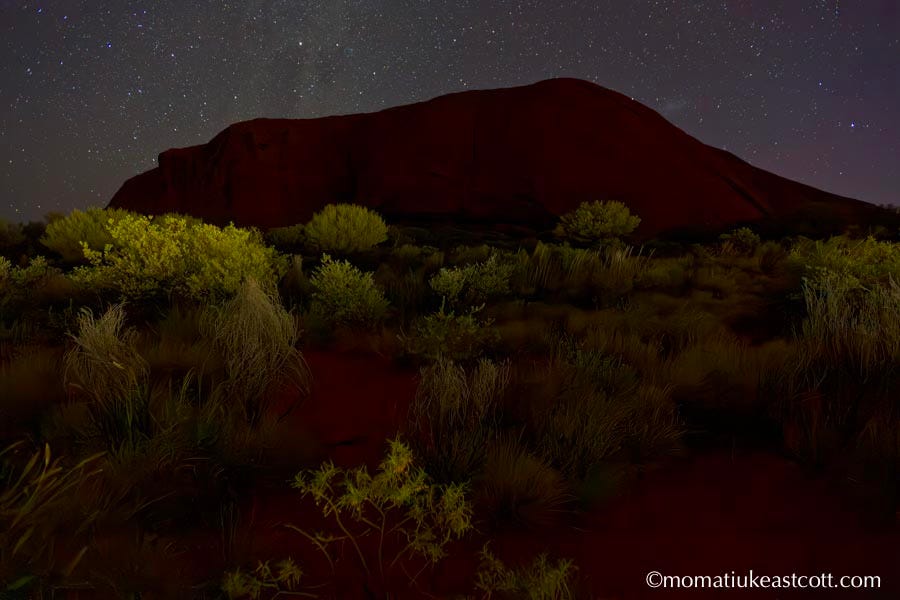
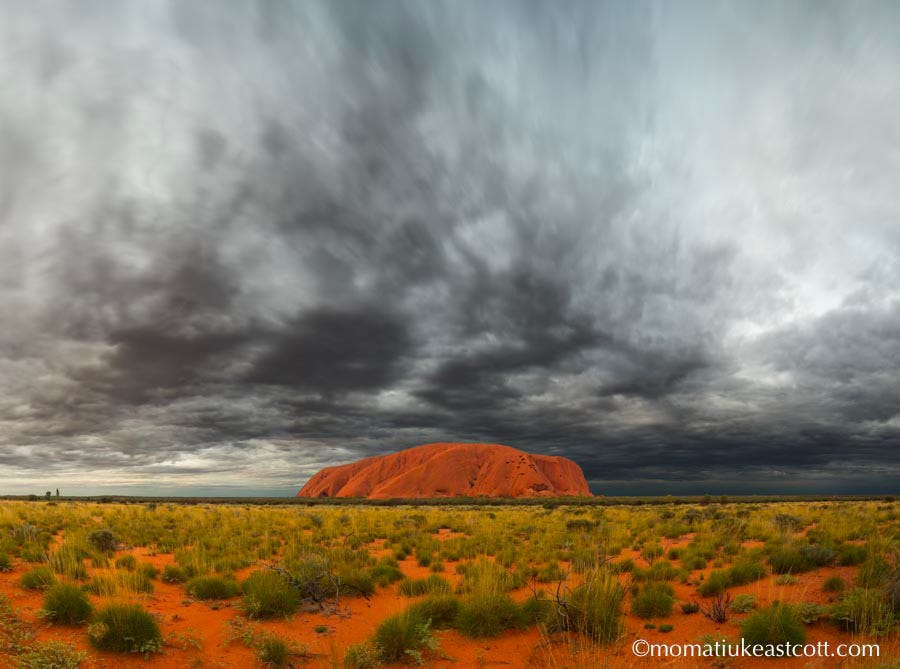
Round and round we go in the red hot center of Australia, circling the monolith of Uluru - once known as Ayers Rock - while looking for chinks in the armor of the rules governing Uluru-Kata Tjuta National Park. We want to walk away from the crowd-containing thoroughfares. And go just far enough to photograph the Rock under the arch of the Milky Way spilling across the indigo sky at night.
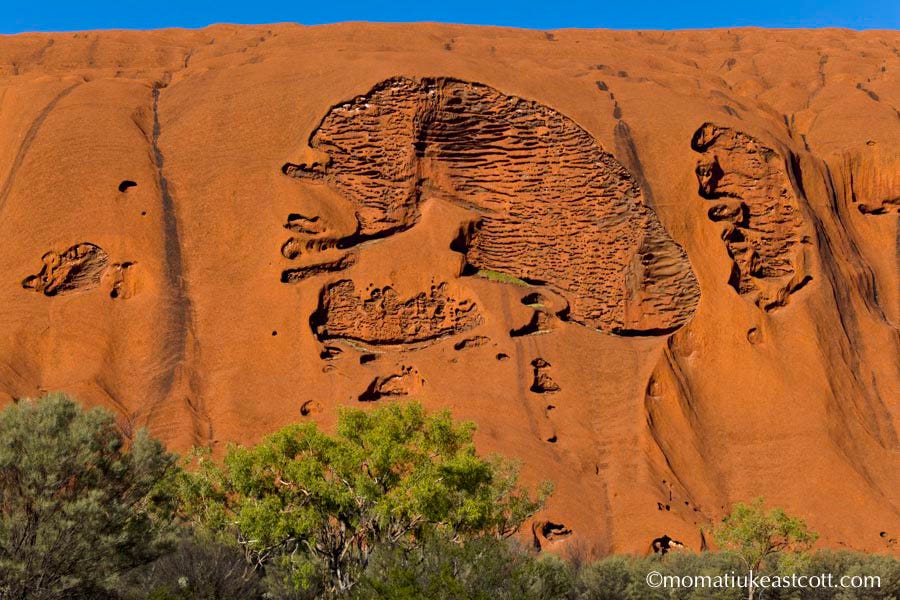
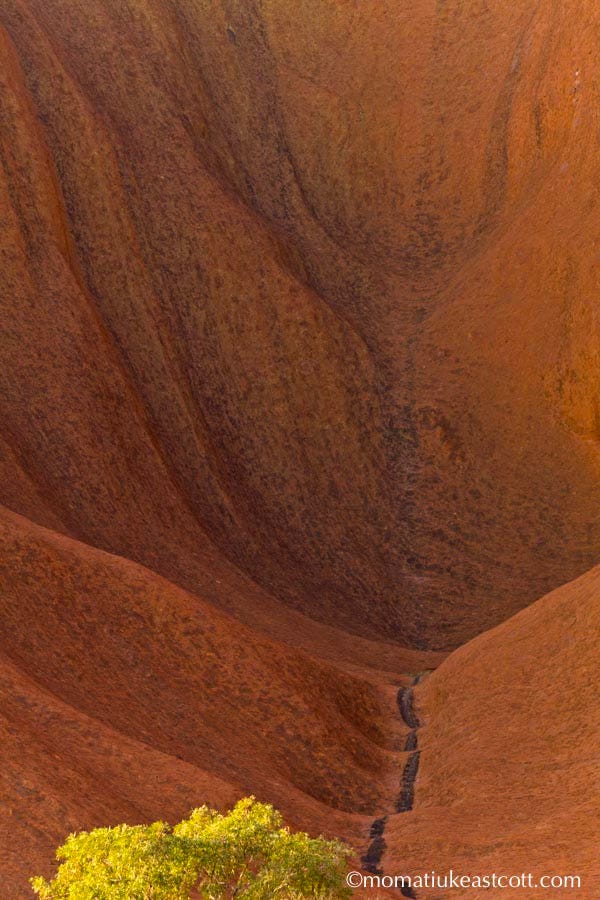
Yet we know we are not allowed to leave the park road which is looping around Uluru too close for what we have in mind. Or depart from the foot trail around the base —which is even closer — so while hiking along its meandering course we can touch the warm sandstone cliffs rich in a coarse mineral called feldspar, and look up at its rough patches resembling reliefs carved by insane giants.
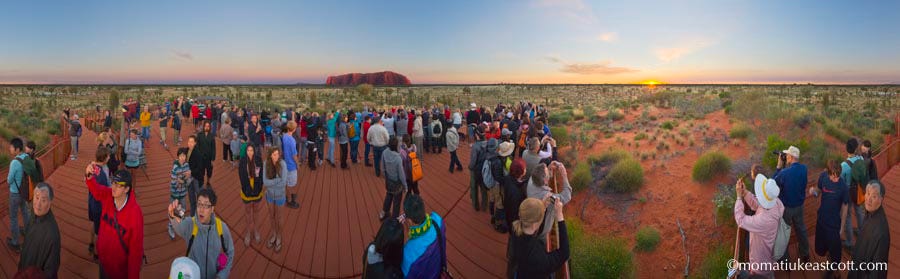
We want to walk into the bush far enough to uphold the entire bottle stopper-shape of the Rock and the flat land around it, and capture the essence of Uluru's apartness from all other rocks in the world. Even if we try to execute it out in the open when the first light licks the Rock, we may run straight into humanity already present and, like us, watching.
This land was given back to the Anangu people, the Aboriginal families of the region, in 1985, and they in turn leased it to the Australian government for 99 years. Now the park is administered jointly, and its managers are restricting access to sacred areas which should not be photographed or even seen. The non-Aboriginal administrators are sharing the glory of this World Heritage site with the original owners whose ancestors have lived and hunted here for more than 50,000 years, often competing with scavenging birds.
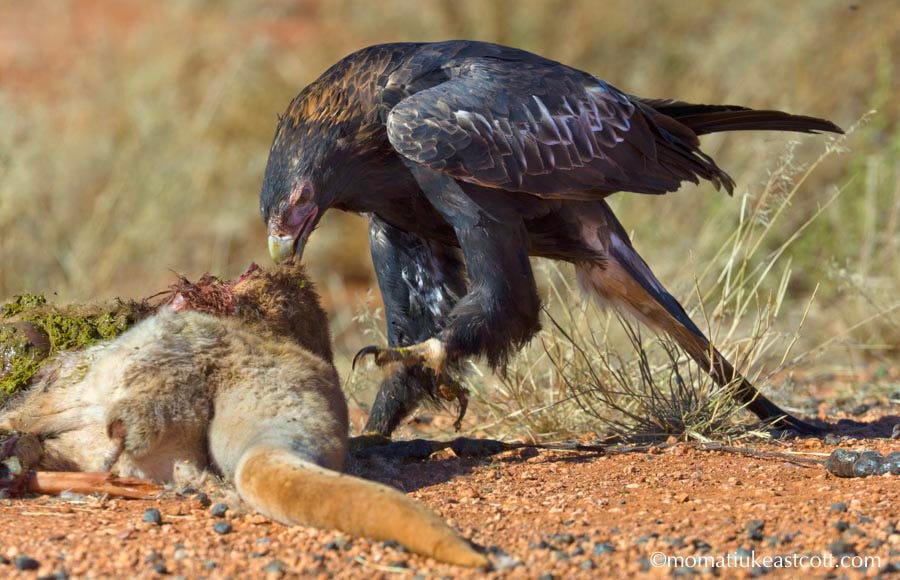
But who knows how long ago, really? And who can fully comprehend the huge effort it took to extract sustenance from this land, sandblasted by winds and baked by the sun? There are some precious oral accounts, documentaries and illustrations depicting the never-ending toil of survival, but who knows how the original Australians managed to squeeze small bits of nutrients from tough-skinned wild fruit, gritty grass seeds and gnarled serpentine roots? How they transferred the energy of light-footed kangaroos, slithering snakes, darting lizards, fat grubs, and fluttering birds they caught and gathered in sandy ravines, among tumbling rocks and under tree bark -- into their own bodies?
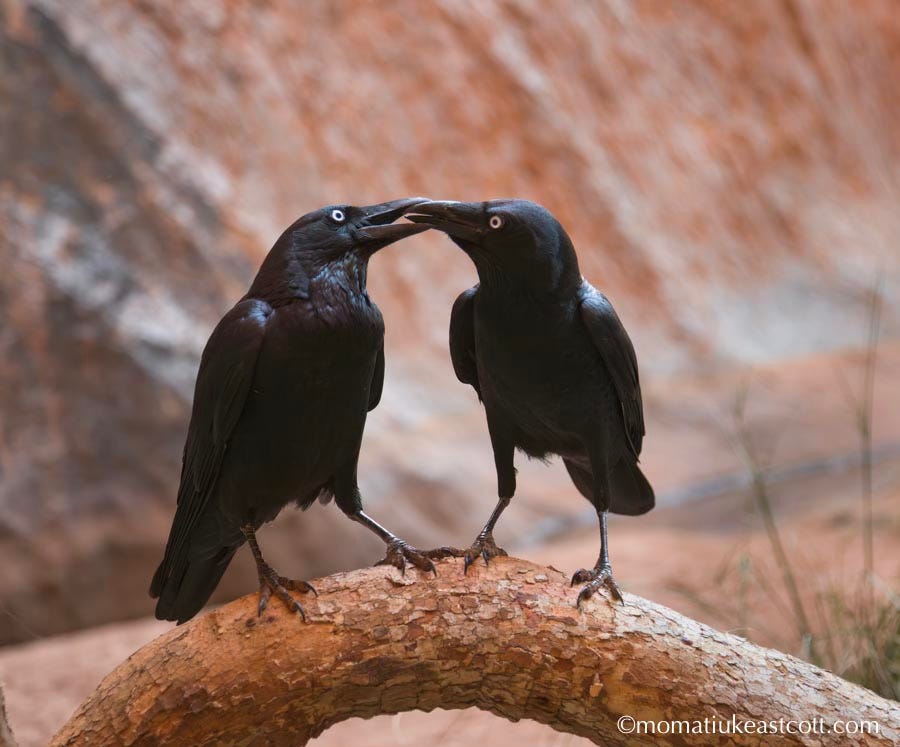
We learn that some Aboriginal languages had several classes of nouns, one depicting men and all animate objects, another including women, fire, water and violence, and — astonishingly — a separate group for those including edible non-poisonous foods. This way, the Aboriginal children could learn what may not harm them and walkabout in the desert with this thin sliver of protective knowledge. But what if they were poor grammarians?
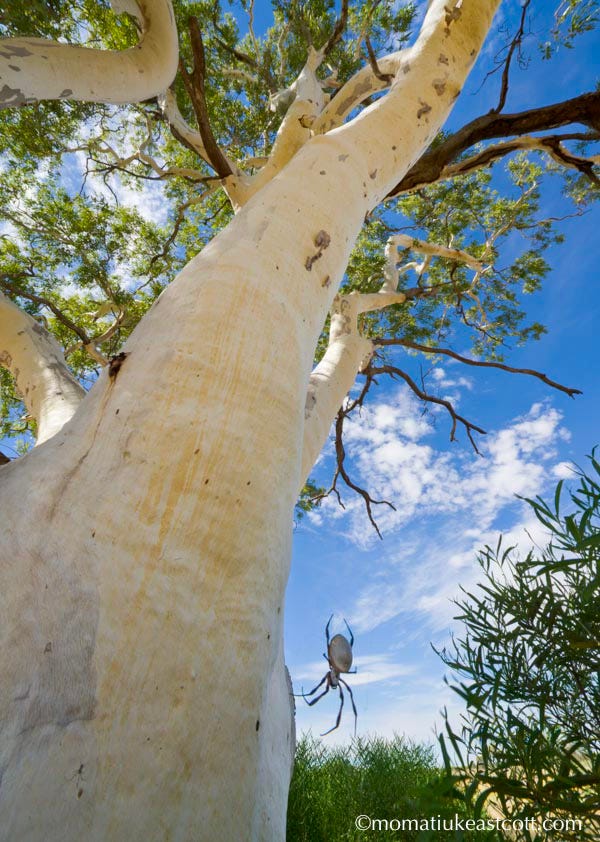
We already know we are poor rule breakers. The only time after dark I drop John off by the side of the road so he can sneak into the bush of mulga, river red gum and Spinifex, I get a park's ranger knocking on our van's window almost immediately. Painfully polite, he asks if I am alone, and I say that I am not. Is it the clear desert air and the canopy of stars which enhance my desire not to lie? For my answer, I know, may unleash some disciplinary action. The ranger leans on his car horn repeatedly and summons John who eventually appears, all innocence and round eyes: "I was just down the road, looking for stars." And so he was.
But there is more to it than better planning, for we know how we can wiggle around many rules. I can drop John off and drive away only to return some time later. Or we can park a mile down the road and walk in: no one but snakes, lizards and fat grubs would know we are lurking in the bush.
Yet something about this sneaky approach is beginning to bother us. The hulking massif of Uluru is veiled in the ancient traditional knowledge which is obscure and absent to us, but ever present and sacred to the people who lived — and still do —around here, with formidable spiritual powers locked in these rocks, vegetation and dry stream beds.
This is where the Aboriginal Dreamtime and all its creation stories, laws of the land and the necessity to respect their wisdom wrestle with our vision of the world, circumscribed by what we like to call logic, rationality and science. Our modern mantras, balanced on these tangible foundations, tell us this is just the land and the rocks and spindly trees, and we should be able to go where we want, explore and experience this place our way, with no impediments. We understand restrictions governing areas recovering from erosion, willingly adhere to garbage disposal rules, and cherish the no-noise policy, but not being able to enter the scrubby bush for an hour or so, just because of some restrictions created by the traditional culture which is already spread-eagle and panting on its deathbed?
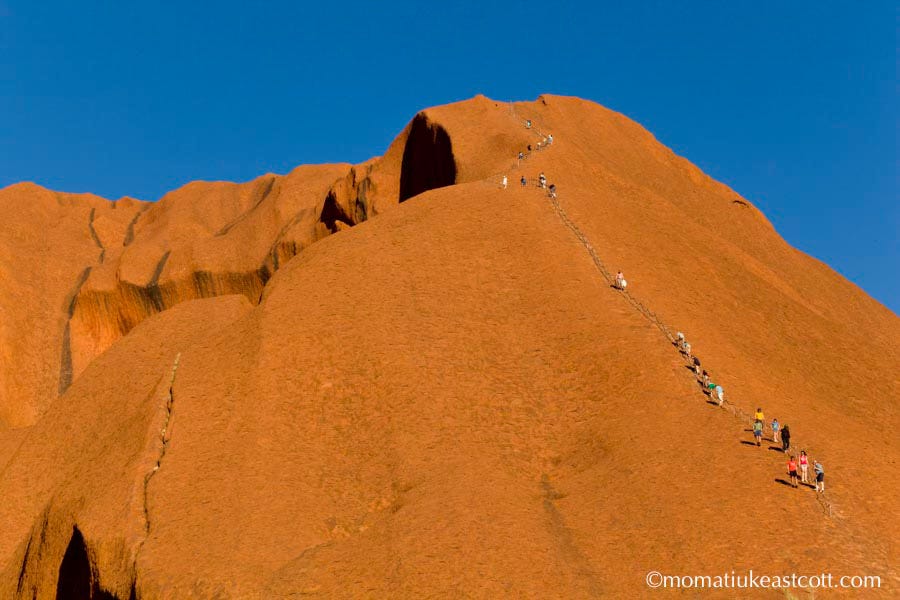
Then something begins to take shape, vague at first but stubbornly there. And we gradually begin to understand that how we move and with what intent may upset some delicate balance. And that's all we know. We do not know why, but it seems wrong to do just as we please. We see hikers, often led by park rangers, climbing the steep flank of Uluru by the only secure and marked route, and read the words of a traditional Aboriginal owner printed in the park's brochure: "That's a really important sacred thing that you are climbing. You shouldn't climb. It's not the real thing about this place. The real thing is listening to everything." And what strikes us is that the appeal does not forbid, just asks to try to consider something uncommon and important which, because of its secret nature unknown to others, we cannot understand at all.
Just: stop. Consider. Please.
We go back to our daily circling of the Rock, but this time working out the legally accessible angles and imagining Uluru's dense night shape floating between the Southern Cross and the end of the universe. If we come too close, the shape flattens into a featureless blob. Too far, and the noble mass becomes too small. We change our lenses, consider this and that, look longingly into the forbidden bush and keep circling, but it is leading us nowhere.
Suddenly, a gray, elongated shape enters the road in front of us, and we pull over.
A snake?
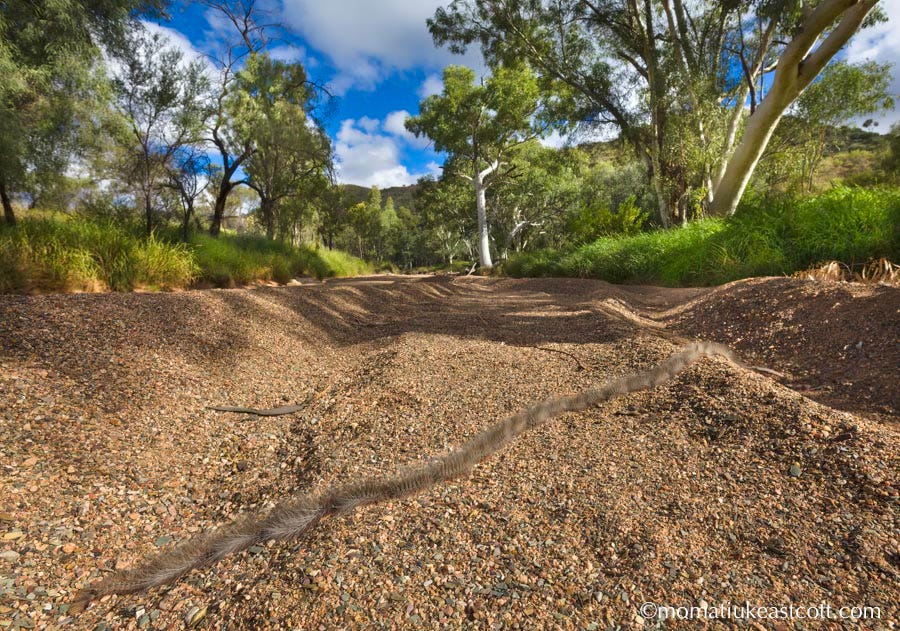
It is a long freight train of Processionary caterpillars, Ochrogaster lunifer, hundreds of furry animals walking nose to tail, perfectly following one another as if pulled by some invisible puppet strings, orderly and unhasty, but so determined that when I place my foot in front of the leader, it merely circles my hiking boot and keeps on going without slowing its stride.
We follow the procession into the grass, flop on the gravel to photograph its progress, and wonder. Do these hairy critters, whose touch can produce a nasty skin rash and -- or so some sources claim -- a spontaneous abortion in pregnant mares, also obey some social order and a hard-wired history they derive from their DNA, the way we circle Uluru while obeying the rules of our kind? Nocturnal foragers, these caterpillars usually hide during the day in large communal nests hanging on bushes and weaved of silk, old skins, and other debris, which earned their offspring the name of Bag-shelter moth, and emerge when they must find a suitable “food tree” full of tasty leaves. Every individual trails a thin strand of silk as it moves along, and when other caterpillars encounter such strands they follow them until the string of animals becomes long, invigorated and full of purpose.
The purpose, as usual in nature, zeroes on survival. Small birds who would not hesitate to grab a single caterpillar may be reluctant to attack what looks like a snake. And even bigger and bolder predators may be deterred by hundreds of spiky hairs. When disturbed, the caterpillars quickly curl up into tight hairy spirals until no danger is evident, but they soon reassemble and march on.
After our first encounter near Uluru we start to photograph them everywhere: near King's Canyon, in the McDonnell Ranges, on some small trails. The Milky Way we may take would be just another picture of its starry wings, enhanced by the clear air and particularly prominent in the Southern Hemisphere, but these moving gray trains in the desert dust are our consolation prize. Their sense of purpose is contagious. In the next weeks we will look for subjects to photograph as if they were our great food trees.
When my own silken thread suddenly reappears in the city of Canberra many days later, I almost trip on it. I am looking at the Milky Way painted with natural earth pigments on eucalyptus bark by Malawan Marika, an Aboriginal artist. The painting was done in Yirrkala in North East Arnhem Land, circa 1965, and the bark slab, rough-smooth and dark ochre all over, shines with the multitude of stars I know.
But there is something else disturbingly familiar about this image, one of many paintings comprising the National Gallery's Aboriginal & Torres Strait Islanders Art exhibit. I read the "surface story" offered to satisfy the curiosity of non-Aborigines who want to know the meaning of all symbols presented, from small sandy dots to luminous circles and bold cross-hatchings. But the story predictably glides on the surface of things and hides true meaning.
I see Baru the crocodile, apparently a mighty creation ancestor -- or how else could he appear in the middle of the desert where rivers hide under towering folds of sand dunes at will? I see the the Milky Way dissecting the night sky, and read about two brothers fishing in their canoe which capsizes in strong wind, and the hungry croc finding their bodies. Nothing nasty happens here: the brothers and Baru ascend into the night sky and became constellations. So far so good. Then some Possum ancestors playing clapsticks nearby also join the others in the night sky, followed by dancing women, a Native Cat, the submerged canoe, and the Scorpion who once happened to be a man. This is a nice A-B-C story, but it amounts to little more than comings and goings of various characters. I do not understand its hidden meaning, which hovers around silently: a spiritual thicket I can never enter.
I look closer at the painting, and suddenly I see our caterpillars. They turned into the stars of Malawan Marika's Milky Way and shine like mad, ready to look for their food trees in the desert sandblasted by strong winds.
©Yva Momatiuk 2011