DOWN THE RIVER
Memories of wars, past and present

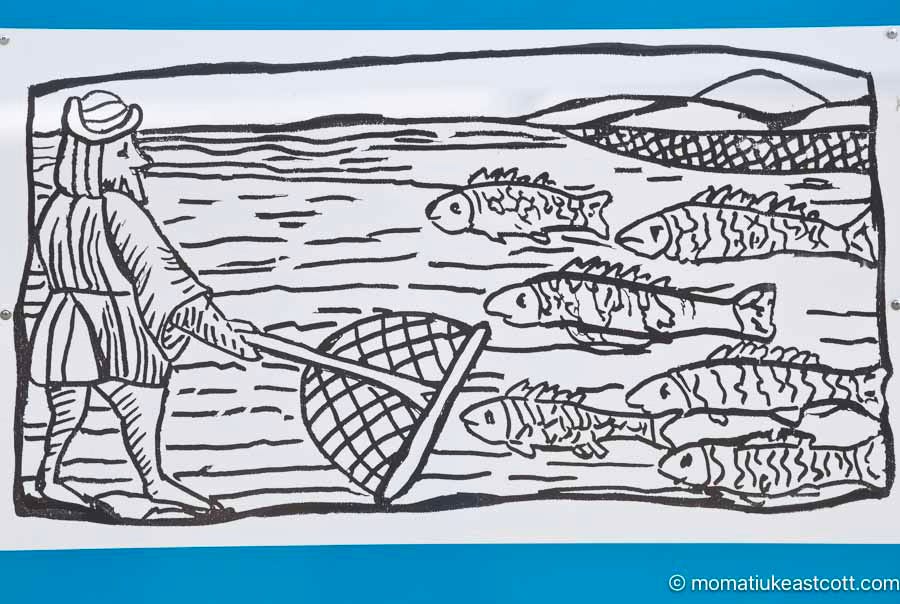
It is the summer of 1957 and Czarna Hańcza River, the only bright ribbon in the night forest, flows by unhurriedly. I am sitting close to a small campfire with my three buddies but flames seem to hold the warmth all to themselves. We just graduated our high schools and came here some weeks ago all the way from the capital city of Warsaw to explore wild waterways of the northeastern region of our country. Our two plywood kayaks come from a rickety rental place on Vistula River: we carried them to the nearest train station, loaded our boats into one of the cattle wagons and explained to the train engineer by which lake he should make an unofficial -- and probably illegal -- stop to let us get off.
But tonight the glory of our adventurous beginnings is gone. Instead, we are cold and very hungry: in villages we recently paddled by all grocery shops were closed, their doors barred with rough boards and nailed in with rusty spikes. When we ask what happened there, the villagers just shrug. "Bandyci," they say: the bandits. They broke in, took the cash and all they could carry: food, tools, the works. The police came, nailed the doors shut and may never return. And with Lithuania and Belarus and Ukraine right across Poland's northeastern border, and their endless fields, thick forests and trackless backwater swamps stretching all the way East, the bandits could be anyone at all. Ours or theirs, take your pick.
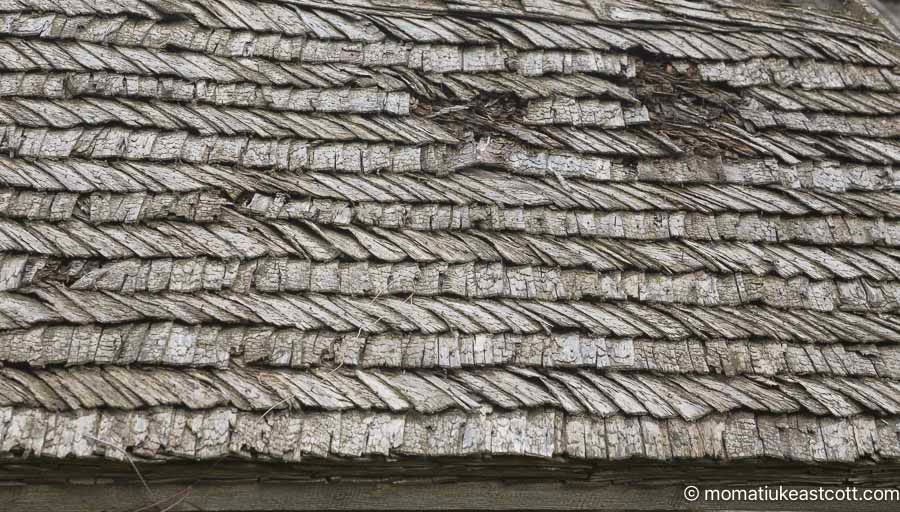
But naming the thieves will not feed us. Our rice has been long gone, and so are our crackers, bread and apples. As for any protein, forget it: the last chunks of sausage had been devoured days ago. And during several weeks of hard paddling across lakes and portaging our kayaks between connecting rivers we have hardly seen any substantial dwellings except for occasional smattering of village houses covered with wooden shingles and dirt tracks following rough stone walls which hold livestock.
So, how do locals survive? The country is still devastated by WW2 and even the number of trucks which deliver foodstuff is limited. People grow their own porkers and butcher their old milk cows. They also fish, snare rabbits and hunt deer in the fall. They rely on their vegetable gardens and fruit trees -- and not some government stores, poorly supplied and often closed for weeks, like the ones we counted on along Czarna Hańcza River.
"Czarna" means black in Polish, and -- according to the Wikipedia page "the name Hańcza may derive from a Jatvingian or Lithuanian word Anca, meaning "a river flowing in a long, deep channel," consistent with the river's steep-sided trough. A folk tradition recorded in local sources attributes the name to the Lithuanian Duke Trojden, who, during a battle with the Teutonic Knights at a crossing of the dark-watered river, declared gana cze ("enough retreating".)
But we cannot even retreat. We just sit, too cold and hungry to do much of anything else. Suddenly a flickering light pierces the night around the river's bend. It is a rowboat, with a flaming łuczywo, a hand-made torch of sap-soaked pinewood stuck in the bow. The boat carries two men who bring it to our bank.
"You guys look hungry," says the one at the stern. "Are you?" and, not waiting for an answer, he reaches under his seat. "Catch!" He tosses something and two dark shapes roll directly toward us.
"These are original UNRRA cans," he explains. "Good dense pork, a kilogram each. Eat it, and it should get you some distance where you may buy food." And, as he pushes off, he adds: "Be careful: these are old cans. First make a small hole in the lid, and if gas comes out hissing and stinking do not eat this stuff: it will kill you."
We all know what UNRRA stands for: United Nations Relief and Rehabilitation Agency was founded in 1943 to bring relief of food, clothing, medicine and other supplies to war affected areas -- Poland included. I remember the first orange I ever saw: an aromatic golden globe rolling out of the UNRRA parcel my family received when I was five years old. But these cans hold a much greater promise than some tropical luxury fruit. I no longer remember who pierced the lid, but I know there was no hiss. It was safe, and whatever was inside was ours to eat. We survived, and the war seemed to be over for good.
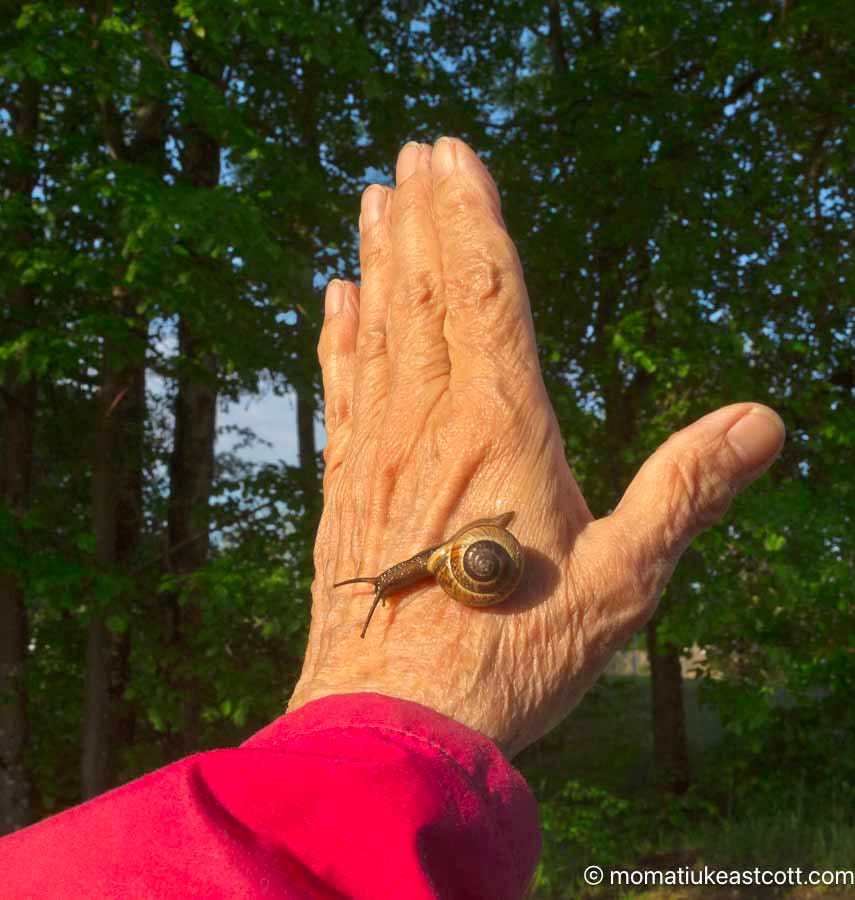
Many decades have passed since then, and I am back on the banks of the same river with my husband John and brother Jeremi. The trees are very tall now, the roads mostly paved, and food stores in modern tidy villages well supplied, so I let a slimak winniczek, Helix pomatia -- a highly edible escargot -- warm up on my skin with no danger of being devoured.
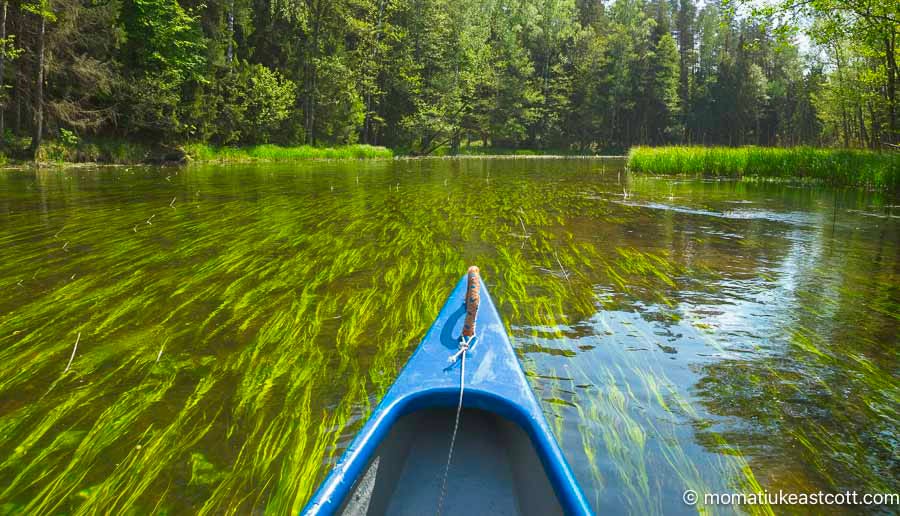
We rent a kayak for Jeremi, a canoe for us, and set out on the lower part of the river with its slow safe current rolling over emerald lining of aquatic vegetation which every spring spreads from bank to bank of Czarna Hańcza. The river is floating through recently established Wigry National Park and passes through the Augustów Primeval Forest, where wolves, moose, bears and beavers inhabit the woods.
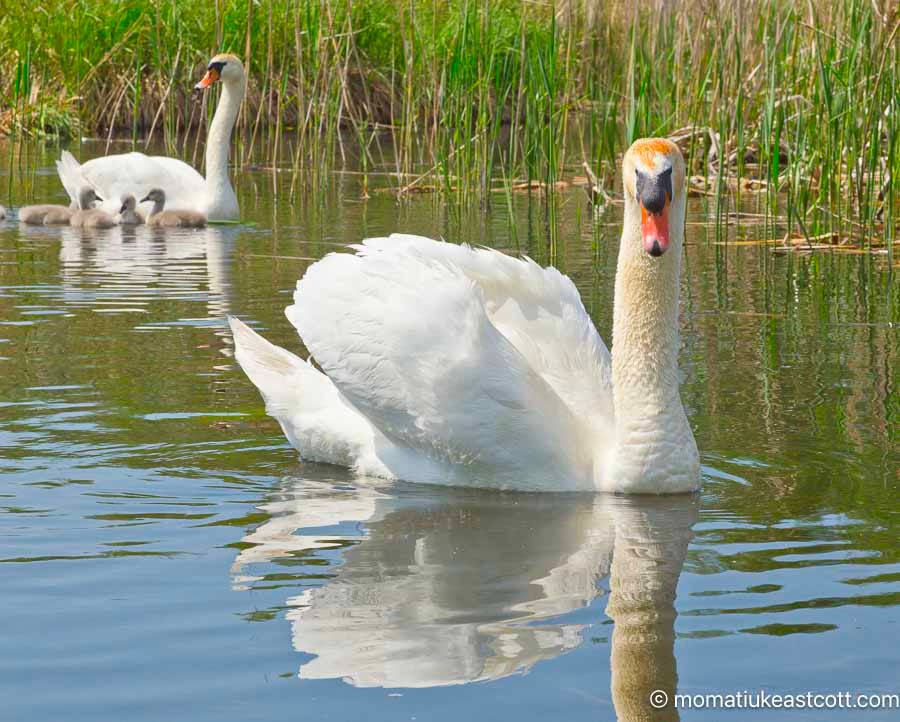
There are birds here, too, and this mute swan male puts on a stern display to protect its family.
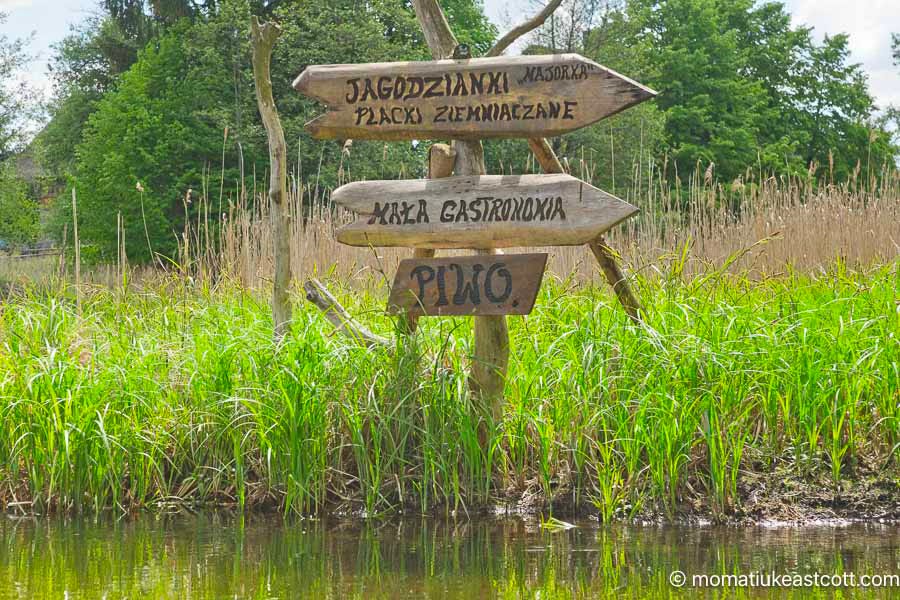
Hungry? Just keep going and you shall be fed: the signs point river travelers toward potato pancakes in a cozy gastronomic establishment which also serves beer.
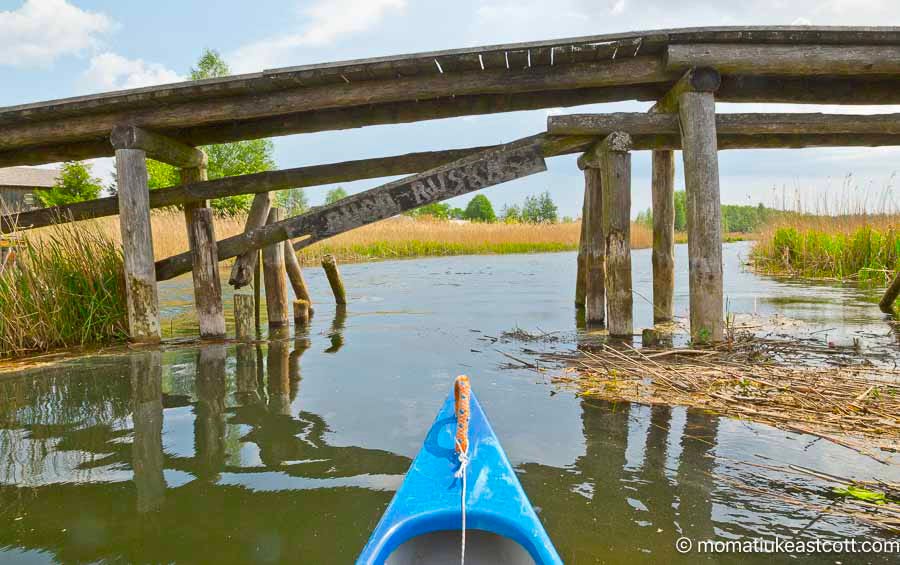
The only reminder of my old days here is a decrepit footbridge, clearly in need of repair.
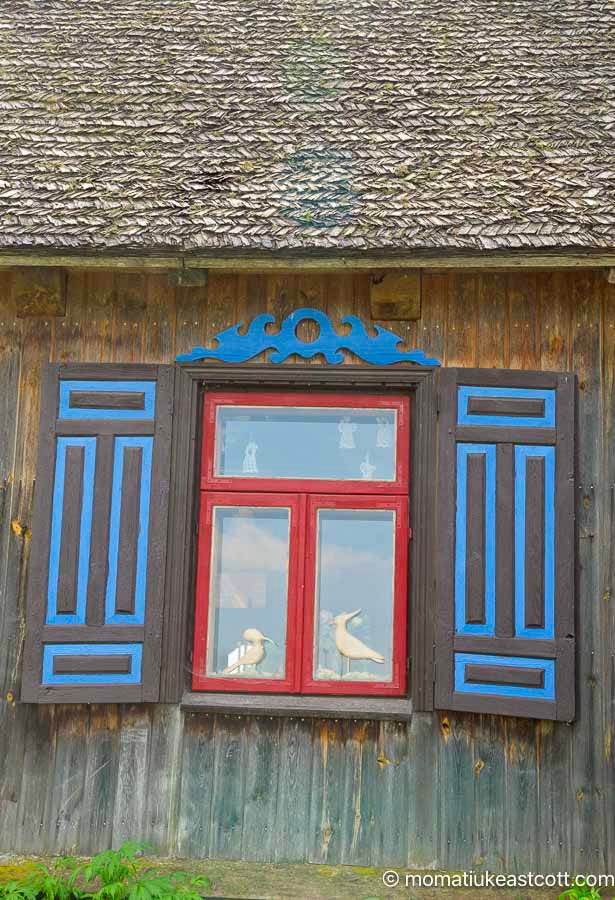
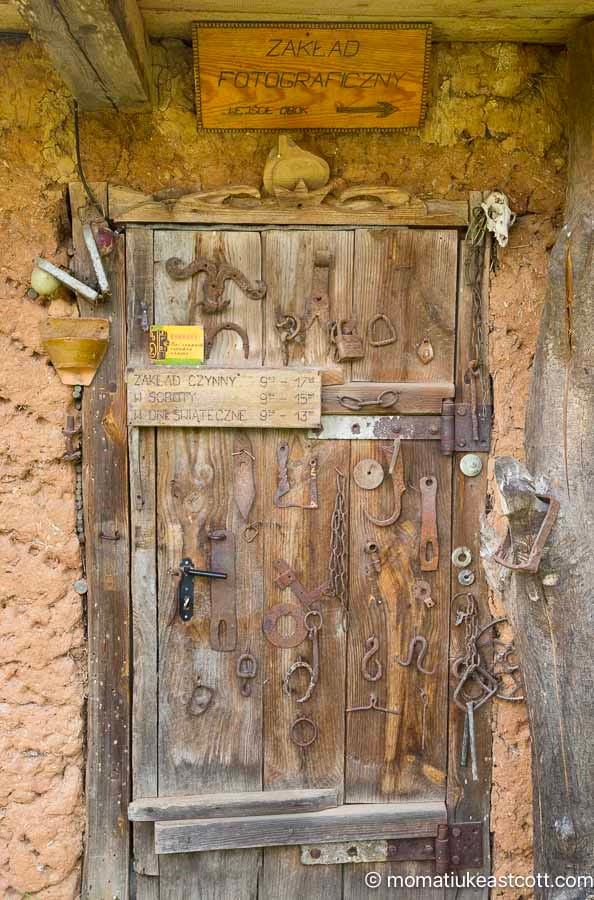
And there are other remnants of the century past: a home of photographer Piotr Malczewski, originally built by Old Believers and well preserved
his studio door
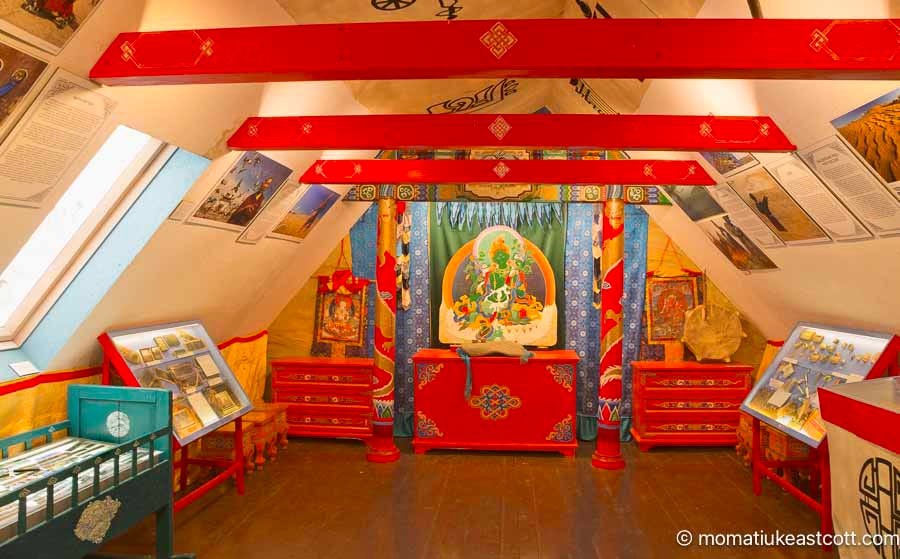
and the showroom, also accessible from the river, with the collection of his images from Mongolia
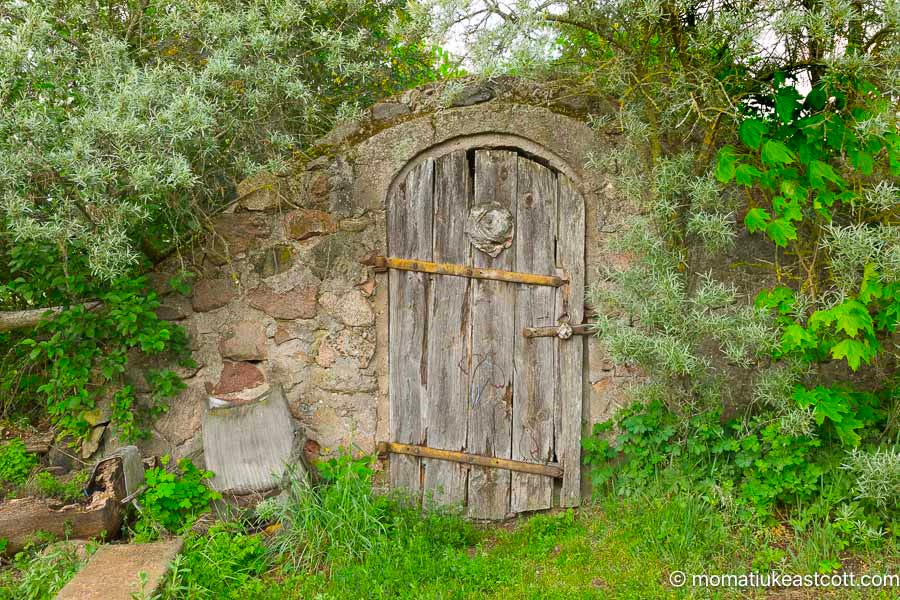
the old stone wall still protects the property
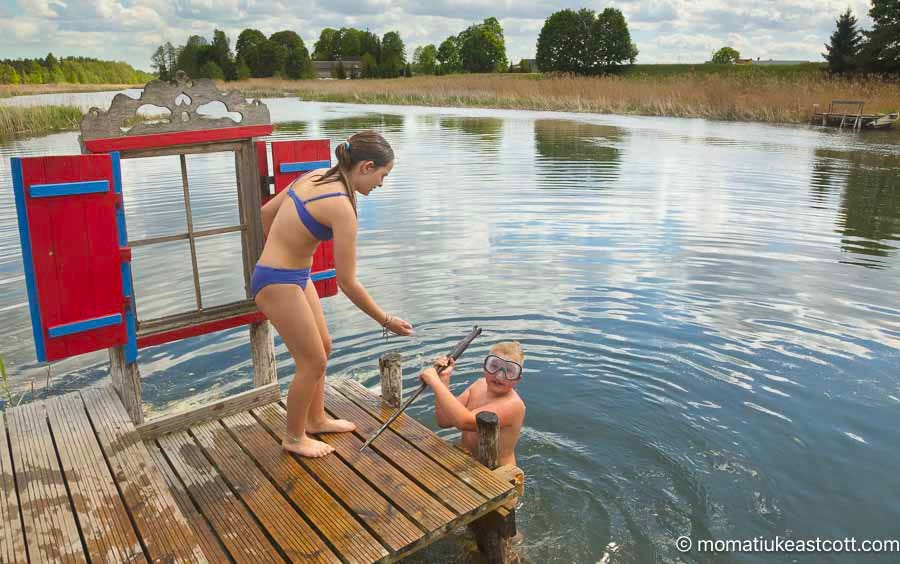
and the family's nearby dock allows for safe ins and outs
There are other artists who settled by the river to create. Andrzej Strumiłło, described as an "outstanding and versatile visual artist and poet" was born in Vilnius in Lithuania. After much travel and work abroad -- including the US -- he had lived and created in tiny Maćkowa Ruda. The gallery is now run by Anna, his artist daughter
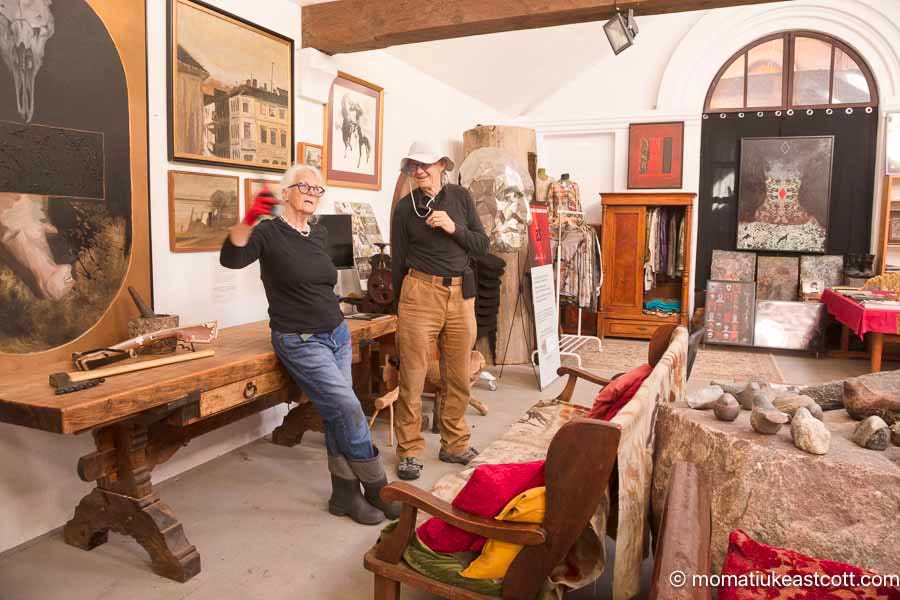
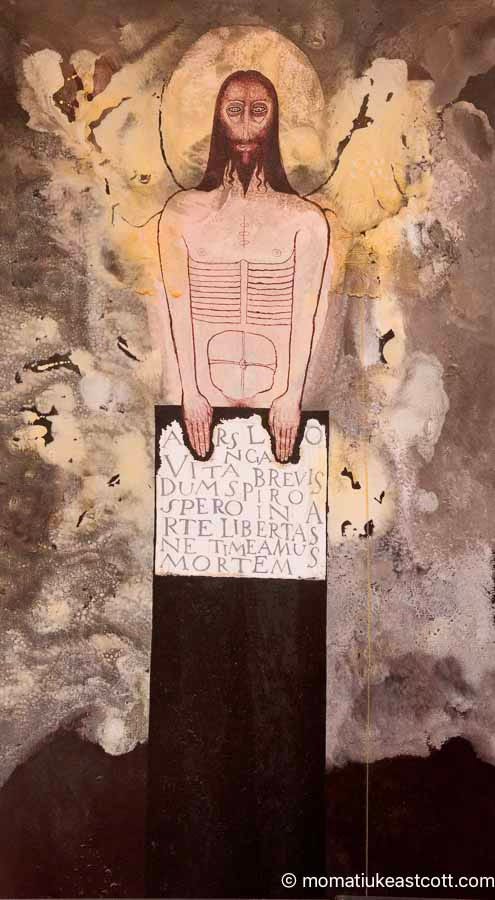
and some paintings evoke his modern surrealist roots with strong spiritual themes.
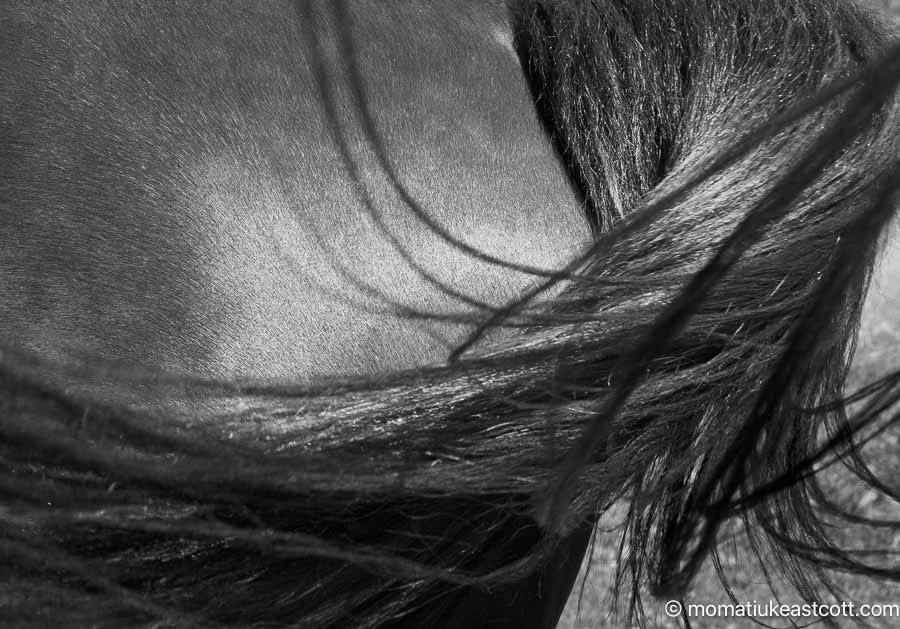
Outside the gallery, a living sculpture: a horse swishing its tail to deal with hungry insects.
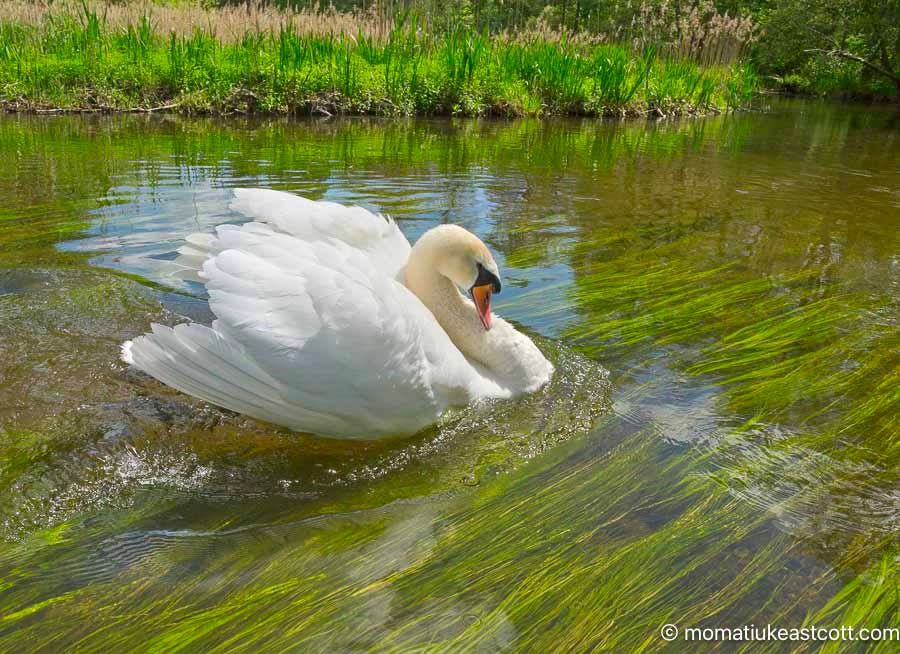
And soon we are back on the river. Never mind the hordes of kayakers who may soon descend on the area, and new restaurants, shops and gas stations which cater to mostly city folks eager to have a good time, but another swan is keeping us company.
And it is easy to paddle your boat into a narrow side channel and follow it for a while
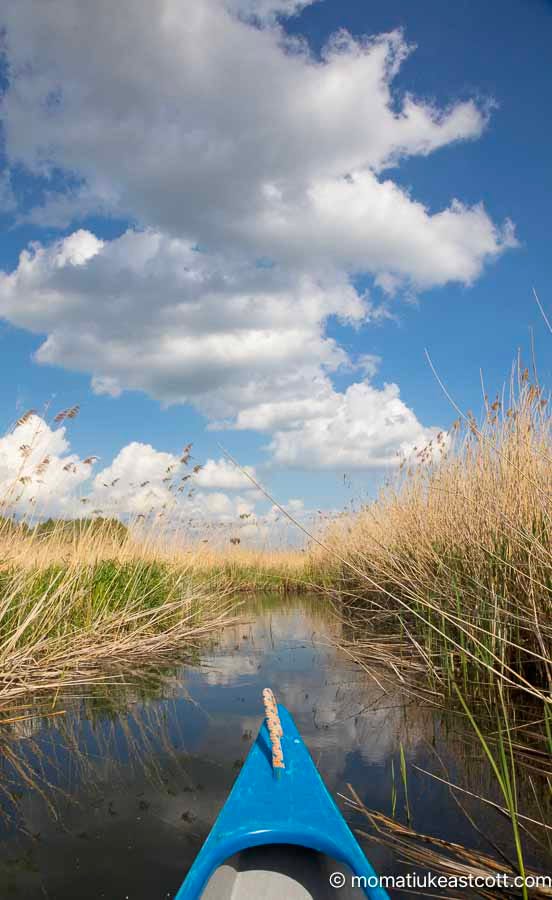
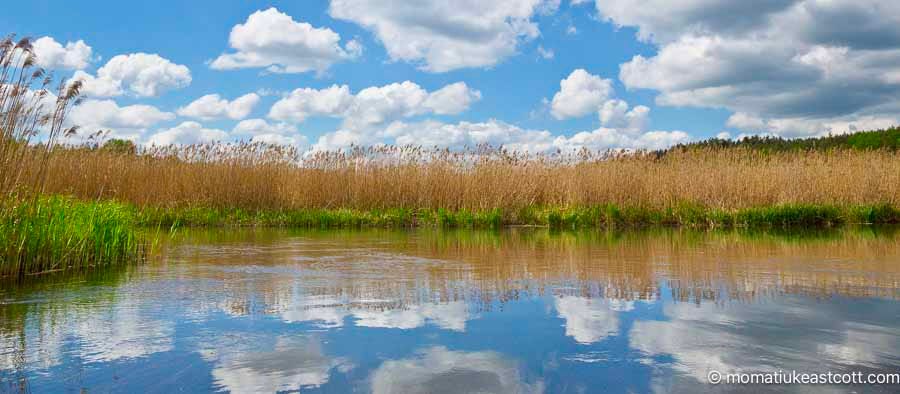
until the river spreads out into another pool and the sky turns upside down.
On the way back to our rented quarters we meet a man inspecting his old farm house. The structure is getting a huge lift: a new concrete basement, new siding, the whole expensive deal. He is a tall guy, and his 2-year- old daughter holds on to his leg not unlike a bear cub ready to climb at a moment's notice to escape danger, real or imagined. He tells us the house was built by his great-grandfather but during WW2 it was gradually stripped of all wood that could be carried away by soldiers of three armies.
He points at the thick forest around the village. "The Russians were here, the Polish fighters there, and the Germans over there. They all needed wood to keep warm, cook their food and line freshly dug trenches which kept collapsing after big rains."
Now he is resurrecting the house, so his family can live here again.
"After 1945, people here just wanted to move to town and live in the newly build concrete blocks: all these great modern conveniences! Electricity, gas, heat, running water, double windows. No more water buckets dragged from the well, no more wood chopping, and so on. But today many folks want to return to the rural way of life -- me, too -- and the only ones who still live in these concrete boxes are those with low income. There are some decently paying jobs around here. There is clean air, good water, friendly neighbors -- and what more would you want?"
It sounds to us as if all wars have finally ended and peace returned to this hilly corner of Poland with its deep lakes and serpentine waterways. Yet they have not. After five years of warfare, Putin just began to bomb Kyiv, the capitol of Ukraine, the country next door. Polish government erected a huge border fence -- a massive 18 foot wall of concrete barriers and barbed wire armed with modern heat sensors and underground cables -- to deter African migrants trying to enter the country from Belarusia, and to intercept aggressive overtures that may occur during military exercises Russia held there only last fall to simulate a clash with NATO countries of Eastern Europe. The border was shut and later reluctantly opened. And on May 15, 2026 the New York Times reported: "A stalwart on defense spending, Poland is training its citizens in civil defense while balancing their jobs and families. The civilian training sessions are part of a new and ambitious plan by Poland’s government to ready its 38 million or so people for the possibility of a military attack from Russia. The program, wGotowosci, or Readiness, is “the largest defense training in Polish history,” the country’s defense minister, Wladyslaw Kosiniak-Kamysz, said when announcing it in November. He hopes 400,000 citizens will complete the training by the end of this year."
Yet our hosts, Janusz and his wife, drove across the border to Lithuania only last Sunday to see a new film about the world's creation. They had to don special helmets to see the show, which they loved. Many locals consider all dire warnings emanating from their TV screens and national papers as pieces of silly propaganda: see? there are no Russians here, just some Ukrainian war refugees we took in and continue to treat well. And traditional Ukrainian dishes, such as borscht, are available in local restaurants.
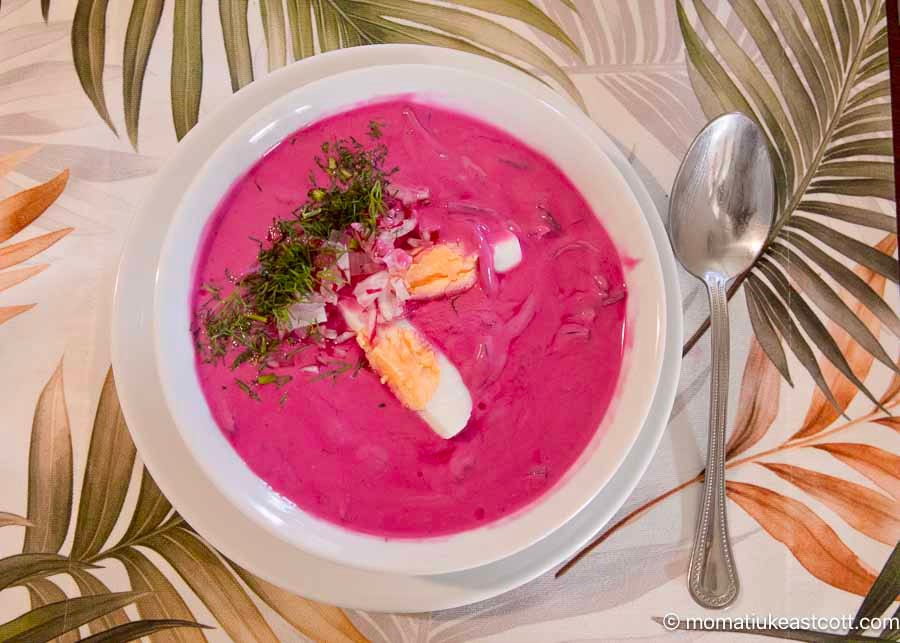
But maybe that faith of living in more peaceful times is bolstered by the sheer desire to feel settled and not continuously endangered? A biker named Jacek, whom we meet on the Wigry Lake overlook, tells us he bought an abandoned farmhouse across the lake, persuaded his dentist wife to close her practice in town ("there are more important things in life than making money") and is now working from home assisting car dealerships to launch their advertising campaigns. In winter, when trees start to split and crack from the assault of killing frost typical of this corner of Poland, they leave their farmhouse for sunny Greek islands.
And when John -- who likes to ask strangers difficult questions -- wants to know how Jacek would define love, the biker takes a deep breath, looks at the calm lake and undulating ranges of forested hills, and says:
" To me, love means you are feeling really safe. And I feel it here."
©Yva Momatiuk 2026